Category: Uncategorized

  • Moon Wisdom: A Yogic Guide to Harnessing the Full Moon Energy

    Moon Wisdom: A Yogic Guide to Harnessing the Full Moon Energy

    Since the dawn of humanity, the moon has illuminated a sense of awe, beauty and wonder in the human mind. One cannot deny the sheer beauty and magnificence of a luminous full moon.

    However, yogic wisdom reveals to us that there’s more to the moon than meets the eye…

    Life on earth is deeply influenced by the lunar cycle in the cosmos above. Since the beginning of time, many spiritual cultures around the world have based their calendars, seasonal farming practices, day to day activities, and most importantly, their spiritual practices upon the lunar cycle for the greatest benefit.

    Spiritual seekers have known of the profound connection between the events happening in the cosmos above, the events happening here on earth in nature, as well as the inner events happening within the body and mind of living beings.

    Yogic science reveals the deepest secrets of the moon, the significance of the lunar phases and ancient rituals to harness the power of the moon for greater vitality, inner balance, lucidity and spiritual remembrance.

    Here you’ll discover the secret yogic knowledge of the moon and the specific ancient practices and rituals to help you connect to the power of the moon to enhance all aspects of your life.

    THE MOON & EARTH CONNECTION

    Modern science confirms what yogis have known for millennia— there is an undeniable and profound link of the moon and lunar cycle with life and the natural events happening on earth.

    The moon is responsible for some of our planets most essential functioning— the ebb and flow of the ocean tides in response to the waxing and waning of the moon, the moons influence on gravity and its role in regulating day and night, the seasons, weather and climate throughout the planet.

    In Vedic traditions, the moon is known as the “Queen of the Cosmos” and is considered the gateway to the astral worlds. 1

    The moon is a symbol of the cosmic feminine and creative force that sustains life called Prana Shakthi. It represents the flow and cycles of life— the tides, weather, nature, night and day, the seasons. On an inner level, it reflects the mind, emotions, sensitivity, receptivity and divine feminine nature.

    The yogic view is that we as humans are not separate from nature— we are nature.

    And that the cosmic energy of both the sun and moon live within us as subtle energy currents in the solar and lunar channels that run to the right and left side of the spine called Pingala or Surya Nadi and Ida or Chandra Nadi respectively.

    SECRET KNOWLEDGE OF THE MOON: CHANDRA VIDYA

    Chandra Vidya is a lunar science— the science of the mystical moon; also known as Soma Vidya. The first reference to this science is found in the tenth book of the Rig Veda, and is later elaborated in the Upanishads and tantric texts.2

    Chandra = moon, lunar, shining, God of the Moon
    Vidya = science, knowledge (secret or subtle)

    SIGNIFICANCE OF THE FULL MOON (PURNIMA)

    The full moon, also known as Purnima, offers a very unique energetic effect to the body, mind and earth because of a very particular alignment of the sun, earth and moon.

    At 12:00 midnight, the sun is located directly below us on earth, and the moon straight above us—exactly opposite of one another with the earth aligned in the middle. At this time, the energy of the sun and moon are in perfect balance and harmony in the cosmos, which influences our inner solar and lunar subtle currents supports helping us establish inner balance, equanimity and harmony within.

    Normally, solar energy is concentrated in the head, which makes the mind active, extroverted and often restless. On full moon days however, the moon above us and pulls the lunar energy of the body upwards while the sun below pulls the solar energy downwards towards the base of the spine— this bathes the brain and nervous system with the cooling rays of the moon from within and above which makes the mind calm, clear and receptive.

    This energy is invisible and mostly imperceptible to us and although we may not be aware of it, our own biological and energetic rhythms are nonetheless deeply affected by it. 

    Of all the lunar phases, the full moon is considered the most auspicious, powerful and lucid times of the month for spiritual practices.

    During full moon time yogis can reap the following benefits:

    • Easier, calmer & more lucid meditations
    • Greater concentration & mental clarity
    • Improved health & vitality
    • Body is super-charged with of cosmic energy called Prana Shakthi
    • Balance of solar & lunar energy in subtle channels (Ida & Pingala) for a balanced body & mind
    • Reversal of the flow of upward moving energy (Prana), & downward moving energy (Apana) to awaken and contain spiritual energy within called Kundalini Shakthi

    5 SACRED FULL MOON PRACTICES & RITUALS

    This full moon, try these practices and rituals to help you harness the power of the full moon for more vitality, tranquility and spiritual remembrance.

    1. MOON BATHING

      There is an ancient yogic and Ayurvedic practice that involves going out under the moonlight and “bathing” in the magical lunar rays above and within.

      This practice is very cooling, soothing and balancing especially for women as it helps balance hormones and people with excess Pitta (too much heat in the body.)

      Note: The exception is eclipses. On eclipses, Vedic wisdom advises against exposing yourself to the harmful rays of the sun or moon being eclipsed!

    2. MEDITATE

      Take time to close your eyes and be still. Any meditation practice you like is great, or you can follow along with this meditation from Bihar School of Yoga.

      Centre yourself with the breath, then bring your attention to the third eye centre, between the eyebrows. Visualise a full moon on a clear night sky at this third-eye point, brightly shining on the waves of the ocean. See the images clearly, and observe the light of the silvery moon dancing across rippling waters or the crashing ocean waves. Become aware of the feelings and sensations within you, and touch the mystery of the natural world from within.3

    3. ALTERNATE NOSTRIL BREATH

      Also known as Nadi Shodhana Pranayama, regulates and balances the bodies sun (Pingala,) and moon (Ida,) channels and equalizes both hemispheres of the brain for greater mental balance, clarity and deeper meditation.

    4. YOGA ASANA

      Try a few slow, mindful, meditative rounds of Moon Salutations, Chandra Namaskar as outlined by the Bihar School of Yoga to connect with the lunar rhythms within and above.4

    5. CHANT MANTRA

      Try this lunar mantra helps us to connect with the powerful full moon energies and awakens lunar energy within us. Chant 3, 9, 27, 54 or 108 times for the greatest effect.

    Om Aim Klim Somaya Namaha

    May we connect with the divine luminosity of the moonlight and unite with its presence within us as the divine light of our own true self.

    Remember your connection to the cosmos this full moon. Recharge your body and mind and unite with the spiritual essence that pervades us all.

  • The Secret Power of Mantra

    The Secret Power of Mantra

    Mantras are powerful sacred sound vibrations from the ancient Sanskrit language that are traditionally chanted during spiritual practices in the yogic tradition.

    The word Mantra comes from two Sanskrit root words:

    Manas = mind
    Tra = to protect, to free from

    Mantra means that which protects and frees the mind!

    Each sound syllable inside the mantra is infused with unique frequencies— much like scientific formulas of sound vibration known to have unique qualities, energies and effects upon the mind.

    Mantras act like secret passwords to various aspects of our inner dimension. They are said to hold subtle knowledge in their vibration and cleanse the body, mind and spirit.

    SUPERPOWERS OF MANTRA

    Repetition of a Mantra is proven to have incredible benefits for the body, mind, and spirit. A regular Mantra chanting practice is known to:

    • Calm the mind
    • Promote love and compassion
    • Regulate the nervous system
    • Improve concentration powers
    • Evoke knowledge
    • Assist in healing the body and mind
    • Increase energy, inner clarity and attention span
    • Activate the vagus nerve
    • Synchronize biorhythms
    • Promote health, happiness and well-being

    Spiritually, Mantras are considered indestructible positive energies— meaning they remain in the cosmos indefinitely for the greater good of all; helping to reduce negative karmas.

    The physical, mental, spiritual benefits and positive effects of chanting sacred mantras are infinite and powerful for both the individual and all beings everywhere.

    UNLOCK THE TRUE POTENTIAL OF MANTRAS

    Here are a few tips to make the most of your Mantra chanting practices.

    1) Intention

    Chanting Mantra with the deepest integrity of intent— with devotion, love, concentration, faith, awareness, commitment and sincerity catalyzes the positive effects of the vibrations and are made more powerful than chanting mechanically.

    Close your eyes and chant Mantra straight from your heart.

    2) Open with Om

    Om, the Pranava Mantra, is an incredibly simple but powerful sacred Mantra. It is traditionally chanted before and after spiritual practices in the yogic tradition. Om is known as the sacred primordial sound, it is said in the yogic tradition that all sound is born from Om.

    Chanting Om before chanting other Mantras acts as a primer for the others. Its resonance activates all other Mantras and makes them more powerful.

    It’s vibration is like turning on a switch to receiving cosmic energy— it is the transmission of pure Divine Love.

    It is necessary to both chant Om before and after spiritual practices to both initiate and seal the energy, as well as before chanting other mantras to have the full effect.

    3) Correctness

    Mantras may be chanted aloud, whispered at the lips or silently within, and are made more impactful when recited with correct pronunciation, rhythm and pace.

    Learning from a highly knowledgeable teacher or guru can help you understand how to chant mantras correctly so you can receive more from your Mantra practices.

    4) Repetition

    The yogic tradition has specific numbers that are considered auspicious for chanting mantra. Repeating your Mantra 3, 9, 27, 54 or 108 times is considered ideal and complete in the yogic tradition for many reasons with great symbolism.

    Authentic prayer beads (Malas,) will have 54 or 108 beads to help you count to higher numbers of mantra repetition.

    5) Initiation

    When you are initiated to a Mantra from an enlightened teacher or Guru, the power of the mantra is said to increase immensely.

    Initiation, or Mantra Diksha, is like unlocking the gate to the Mantra’s full energetic potential and attunes the initiated one to its divine energies.

    6) Practice

    Practice daily! Develop a regular Mantra Sadhana (Mantra practice) to increase the power of and collect the energy from the Mantras.

    You may chant mantra during your daily yoga or meditation practice or as its own practice.

    With love, practice, and intention, invite the secret power of mantras into your life and daily practice and experience the great benefit it has to offer you and to all.

  • The 5 Superpowers of Meditation During Challenging Times

    The 5 Superpowers of Meditation During Challenging Times

    Meditation is proven to have countless benefits to uplift all areas of your life.

    Here are some unique “superpowers” of meditation to support you through challenging, stressful or uncertain times.

    5 BENEFITS OF MEDITATION

    1. REDUCE STRESS & ANXIETY

    Countless studies have shown that meditation and mindfulness techniques can help reduce anxiety and stress.

    By boosting emotional resilience and reducing stress hormones in the body, we naturally become less reactive and knocked down by stressful situations.

    Meditation can’t stop stressors from entering your life…

    Meditation can’t give you your job back. It can’t fix your relationship. It can’t pay your bills.

    But it can help give you a strong emotional foundation to respond to the stresses of life’s challenges with more ease and grace.

    2. IMPROVE FOCUS, DECISION-MAKING & INNER CLARITY

    Meditating trains the mind to be present. The present moment is the only place where we can act, and create positive meaningful change in our lives and the lives of others.

    Every time you meditate, you sharpen your attention and focus.

    With improved focus, we naturally become clearer in our decisions, more precise in our actions, and more effective in creating positive change within ourselves and the world.

    3. BOOST YOUR IMMUNITY & OVERALL HEALTH

    Stress can weaken the immune system. But meditation counters stress!

    An American study in 2003 compared the immune response of meditators and non-meditators to a flu vaccine and found that meditators had a greater immune function!

    So keep your health vibrant and immunity robust with regular meditation.

    4. KINDER TO YOURSELF & OTHERS

    Brain scans show that meditation activates the positive, happy, empathetic parts of our brain.

    When we meditate regularly, we can empathize and care about our emotions and the emotions of others cultivating a positive relationship with ourselves and all.

    Meditation fosters positive emotions, our ability to bond with others and boosts brain activity in the areas of the brain related to empathy.

    5. KNOWLEDGE OF SELF

    Meditation improves self-awareness. Psychologists have noted that patients who practice meditation develop greater awareness of their actions and emotions.

    Through meditation, you get to know all realms of yourself.

    You understand your body, your mind, emotions, habits, strengths, limitations and the deeper purpose of your life.

    Through this inner awareness, you can better understand life’s situations, find the deeper meaning in them, learn from them, and respond to the challenges more effectively.

    Perhaps meditation isn’t a cure for your all your problems….

    But it is a powerful tool to give you the perspective and clarity on your self, your emotions, thoughts and challenges to respond to life’s challenges in the best way to create the best outcome in your life.

  • Are You Practicing the Right Yoga For Your Mind-Body Type?

    Are You Practicing the Right Yoga For Your Mind-Body Type?

    Like diet, yoga should not have a “one size fits all” approach.

    Yoga and Ayurveda are sister sciences. They come from the same ancient source and share a common history, language and cultural background.

    Ayurveda prescribes yoga as a form of therapy to balance your unique constitution of inner elements or unique mind-body type (known as your Dosha-type.)

    Ayurveda offers a therapeutic approach to yoga. It gives specific recommendations of yoga poses (asanas), guidelines on how to practice and seasonal adjustments based on your mind-body type to bring about a greater sense of balance, harmony, self-awareness and vitality!

    Here we’ll explore the ideal type of yoga, tips on how to practice and best postures for you!

    WHAT IS YOGA THERAPY?

    The Ayurvedic approach to yoga is called Yoga Therapy.

    Yoga Therapy offers a whole, complete and holistic approach to health and longevity for all physiological systems with health benefits for the whole body.

    Yoga Therapy, also known as Yoga Chikitsa. Blends the wisdom of ayurveda and yoga in an intentional, healing and therapeutic way to balance the inner elements, or doshas to prevent and manage ailments and experience greater physical and mental vitality.

    It improves the health and function of all body systems – from improved energy levels, cardiovascular health, to improved digestion, balanced hormones, better sleep, maintenance of a healthy body weight, healthy breathing, a thriving immunity, to psychological wellbeing.

    Below outlines the best type of yoga for the individual Doshas. If you do not know your unique mind-body type, send us an email and we’ll get you sorted!

    YOGA FOR VATA (AIR) TYPES

    A yoga practice for Vata should encourage warmth, grounding and nourishment. It should invoke a sense of serenity, focus, inner strength and stability.

    • Begin with MEDITATION to ground and center.
    • Practice balancing BREATHWORK like Nadi Shodhana or Ujjayi Pranayama.
    • Practice in a WARM space or wear warm clothes. (Consider a blanket for Savasana!)
    • Focus on GROUNDING. Root down through your foundation. Yield into the EARTH.
    • Don’t overexert yourself. Your practice should be STRENGTHENING, not draining.
    • Prioritize SLOW, GENTLE and FLUID movements— imagine like your moving through warm water.
    • Focus on short holds, but multiple REPETITIONS of the poses.
    • Connect to your CORE and move from your SOLAR PLEXUS (Manipura Chakra,) between the rib cage and navel.
    • Continually return your attention to your BREATHING. Focus on the INHALATION.
    • Steady and still your GAZE to the floor, horizon or challenge yourself to close the eyes.
    • Move MINDFULLY. Stay aware of your body and breath— MEDITATE in every pose.
    • Balance strengthening with RESTORATIVE yoga for grounding and calming.
    • Close your practice with relaxing and LONG SAVASANA.
    • STAY PRESENT!

    A Vata-balancing yoga practice should include poses that gently warm-up, strengthen and restore the body, mind and energy reserves. It should include fluid joint rotations, spinal undulations, grounding and strengthening standing poses, focus-enhancing balancing poses, warming backends, expansive hip openers and restorative poses.

    BEST POSES TO BALANCE VATA

    • Ankle and wrist rotations
    • Hip and shoulder circles
    • Cat-Cow and Tiger Pose
    • Slow and steady Sun Salutations
    • Warrior I and II
    • Triangle Pose
    • Tree Pose
    • Cobra
    • Pigeon or Thread the Needle
    • Childs Pose
    • Legs Up the Wall
    • Long Savasana

    YOGA FOR PITTA (FIRE) TYPES

    A yoga practice for Pitta should encourage compassion, acceptance and surrender.

    It should balance a sense of ease with self-effort, finding calm amidst challenge, bring softness into strength and focus on being more instead of always doing more.

    • Begin with MEDITATION to calm and soothe your mind.
    • Practice a few minutes of balancing and cooling BREATHWORK like Nadi Shodhana, Sheetali or Sheetkari Pranayama.
    • Prioritize having FUN overdoing it all perfectly. Don’t take yourself too seriously.
    • Practice in a moderately COOL space. You don’t want to be cold, but avoid overheating or doing hot yoga.
    • Be mindful to not be JUDGEMENT or CRITICISM of yourself (or the practice, the teacher, or others in the room!) Embrace a curious, positive and grateful outlook.
    • Don’t push yourself to your maximum, PRACTICE AT 80% effort.
    • Remember— yoga is not a COMPETITION! (Not even against yourself…)
    • Keep coming back to your BREATHING. Focus on your EXHALATION.
    • Prioritize loving and ACCEPTING yourself more than trying to perfect the pose.
    • If you want to challenge yourself, go deeper into your BREATHING and sense of PRESENCE.
    • Incorporate RESTORATIVE yoga to calm and soothe the body and mind.
    • Remember with Pitta, LESS IS MORE!

    A Pitta-balancing yoga practice should include poses that challenge and warm up the body to release heat without overexerting or overheating the body and mind. It should include strengthening poses such as backbends, side bends and twists which warm the body to release heat, with intermittent cooling and restorative poses aimed to cool down and re-center.

    BEST POSES TO BALANCE PITTA

    • Moon Salutations
    • Cobra, Locust and Bow Pose
    • Warrior II and Exalted Warrior
    • Extended Side Angle and Triangle Pose
    • Lunge Twist
    • Eagle Pose
    • Standing Wide-Legged Forward Bend
    • Childs Pose
    • Bridge Pose
    • Shoulderstand and Plough
    • Reclined Bound Angle and Reclined Hero Pose
    • Supine Spinal Twist
    • Savasana

    YOGA FOR KAPHA (EARTH) TYPES

    A yoga practice for Kapha should create spaciousness, stimulation, warmth and lightness. It should feel inspiring, invigorating and uplifting through energizing breathwork, expansive postures and dynamic movement.

    • Begin with MEDITATION to inspire and uplift your mind.
    • Practice a few minutes of invigorating BREATHWORK like Khapalabhati or Ujjayi Pranayama.
    • Practice at a VIGOROUS pace and intensity to energize the body and mind.
    • Practice in a moderately WARM space. You don’t want to be hot, but avoid feeling cold and drafts.
    • When you are ready to release the pose, TAKE ONE MORE BREATH!
    • Don’t be afraid to challenge yourself and HOLD THE POSE a little longer.
    • Keep your chest and shoulders OPEN AND LIFTED as you practice. Embrace a curious and positive attitude.
    • Be PRECISE in your poses. Pay attention to your posture and ALIGNMENT.
    • Cultivate a sense of LIGHTNESS in your poses.
    • Keep coming back to your BREATHING. Focus on the space between the breaths.
    • KEEP MOVING and have short resting periods between poses.
    • Remember with Kapha, keep on going and DON’T GIVE UP!

    A Kapha-balancing yoga practice should warm and energize the body and mind, to release lethargy and heaviness. This kind of practice should include a good flow of movement between poses and dynamic practices like sun salutations or additional vinyasas in between poses, heart openers, backbends and twists.

    BEST POSES TO BALANCE KAPHA

    • Vigorous Sun Salutations
    • Vinyasas
    • Chair Pose and Chair Pose Twist
    • High Lunge and High Lunge Twist
    • Warrior I, Warrior 2, Warrior 3, Exalted Warrior
    • Extended Side Angle and Triangle Pose
    • Dancers Pose
    • Planks or Side Planks
    • Cobra, Upward Facing Dog
    • Dolphin or Headstand
    • Bridge Pose, Shoulderstand or Plough
    • Fish Pose
    • Boat Pose and Leg Lifts
    • Camel and Bow Pose
    • Cow Face Pose
    • Close with Savasana or Seated Meditation

    JOIN US FOR AN ONLINE AYURVEDIC CONSULTATION

    Discover your mind-body type and receive therapeutic insights on diet, yoga, daily routine and more to support your health and wellbeing with our online Ayurvedic Consultations.

    Yoga promises the great gift of better health and vitality in all bodily systems. When practiced therapeutically for your unique mind-body type, the benefits are endless!

  • 5 Ayurvedic Immune-Boosting Super-Plants (That You May Already Have in Your Kitchen!)

    5 Ayurvedic Immune-Boosting Super-Plants (That You May Already Have in Your Kitchen!)

    Ancient yet timeless, Ayurveda is a vast holistic science of health and healing that aims to bring balance and harmony to the body, mind and spirit so we may truly thrive in all aspects of life.

    One important aspect that determines our current state of health and well-being is the condition of our immune system— our first defense against foreign, disease-causing invaders such as viruses and bacteria.

    Here you’ll discover an Ayurvedic approach to boosting immunity plus 5 Ayurvedic immune-boosting super plants to supercharge your immune system.

    IMMUNITY IN AYURVEDA

    The concept of immunity in Ayurveda is explained by a theory known as “beej-bhumi” where “beej” means seed, and “bhumi” means land.

    The human body is symbolized by land and infection or bugs are like seeds of weeds that pollute, weaken and harm the land.

    If the landscape of the body is weak, deficient, polluted or the natural elements are out of balance, it becomes fertile ground for the seed of infections to grow and spread.

    However, if the body is thriving with health, vitality and the inner elements are in balance, it has the strength to withstand infections and not allow the seeds of disease to take root.

    3 GOALS OF AYURVEDA FOR A THRIVING IMMUNITY

    Ayurveda teaches three main goals for a thriving immune system:

    1. Boost Essential “Energy of Vitality” (Ojas)

    Ojas is a Sanskrit word that means “vigor,” “vitality,” “strength,” and “luster.”

    It is the essential energy of the body that gives strength to all bodily systems— including our immunity.

    You can boost your Ojas by getting enough sleep, minimizing physical and mental stress, developing a supportive daily routine (Dinacharya), practicing appropriate Yoga (Asana) for your body-type, breathwork (Pranayama) and meditation (Dhyana.)

    Also, you can enjoy more Ojas-enhancing tonic foods like dates, figs, almonds, sweet potatoes, whole grains, mung beans, coconut, bananas, avocado, leafy greens and sweet fruits. Or if you eat dairy, you can enjoy a small amount of organic cow milk, yogurt, ghee and honey.

    2. Reduce Waste Materials (Ama)

    Ama refers to the unmetabolized wastes of the body that overtime collects and in excess, causes pollution and imbalance. Due to improper diet, poor eating habits, excess physical and mental stress, environmental pollutants, lack of exercise, inadequate sleep, etc. Ama builds and clogs the natural channels of elimination, disrupts cellular communication and therefore weakens the immune response.

    To strengthen the body and boost our bodies natural defenses, we must “burn up” and clear away these waste materials through various Ayurvedic practices such Yoga Asana and Pranayama, proper diet (Pathya Ahara,) Ayurvedic massage (Abhyanga), sweat therapy (Swedana) and seasonal cleansing programs (Panchakarma.)

    Alternatively, ama can be reduced by cooking and supplementing with simple digestive and immune-boosting spices and herbs that kindle our bodies digestive fire (agni) to essentially “burn up” accumulated wastes that make the body and immunity weak, sluggish and imbalanced giving our immunity a nice boost!

    3. Support Immunity (Vyadhikshamatva)

    The immune power of the body that prevents the development of bacteria, viruses or disease is called vyadhikshamatva.

    Healthy immunity is a natural result of a healthy diet and lifestyle.

    To supercharge your immunity, Ayurveda recommends eating the right diet for our unique body-mind type (Prakriti,) developing an appropriate daily health and cleansing routine, cultivating a positive and peaceful mind and taking herbal medicines (Aushada) that support immunity (many are simple remedies that you already have in your at-home pharmacy— your kitchen!)

    5 AYURVEDIC IMMUNE-BOOSTING SUPER PLANTS

    Meet some of your new immune-boosting Ayurvedic besties.

    Health starts in the kitchen, so we’ve shared 5 of the most powerful plants in the Ayurvedic pharmacopeia— many that you may already have at home!

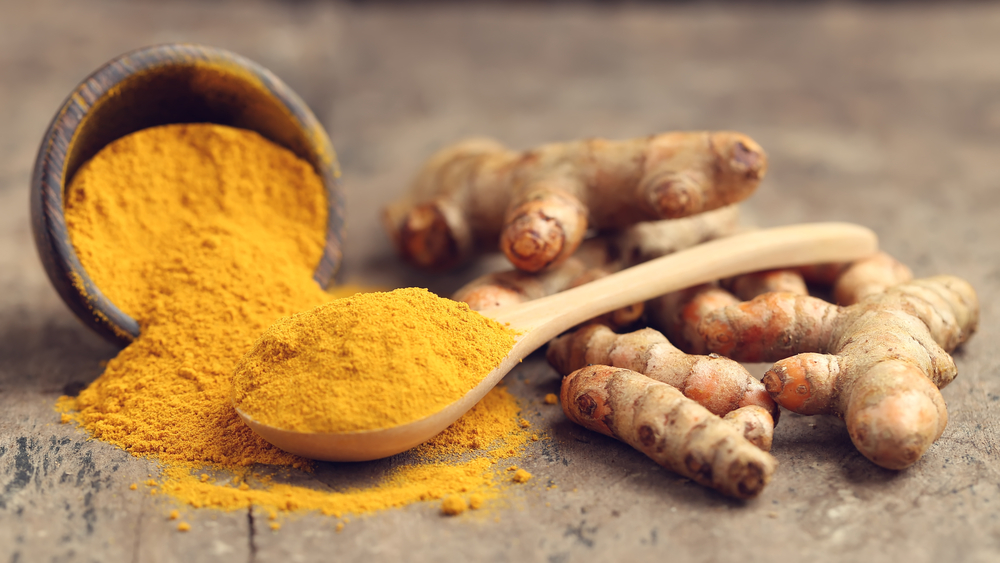
    1. TURMERIC (Kanchani)

    One of the names for Turmeric in Sanskrit is Kanchani which means the “Golden Goddess,” and this incredible root really lives up to her name!

    The golden hue of turmeric comes from one of the naturally-occurring chemical compounds called curcumin, which gives a vibrant yellowish-orange color that has been accenting the curries of the world with color, flavor and health benefits for centuries!

    Used extensively for culinary, medicinal and even spiritual purposes in ancient India, it was believed that turmeric gives the energy of the Divine Mother and grants prosperity.

    For the yogis, it was also said to be effective for cleansing the chakras, by purifying the channels of the subtle body. (What a bonus!)

    Even in western science, the benefits of turmeric have been a hot topic as one of the most well-known and widely researched plant medicines around the world.

    Modern research is now highlighting turmeric’s potent anti-oxidant, antibacterial and anti-inflammatory properties and its ability to support healthy immunity.

    Benefits of Turmeric:

    • Powerful natural antibiotic
    • Highly-effective anti-inflammatory qualities
    • Reduce the pain of a sore throat
    • Supports healthy functioning of the respiratory system
    • Effective in cancer prevention
    • Boosts agni (digestive fire) and reduces ama (waste materials)

    Ayurvedic Energetics:

    • Taste (Rasa): bitter, astringent
    • Action (Virya): heating
    • Constitutions (Doshas): Balancing for all doshas, in excess may aggravate vata and pitta

    Suggested Use:

    • Cook with it: Cooking with either fresh organic turmeric or turmeric powder is a great addition to your daily meals. Add a pinch to your recipes to add incredible immune-boosting benefits to your recipes.
    • Brew a tea: Boil either 1 tsp fresh turmeric root slices or ¼ to ½ tsp organic turmeric powder in water for 5 minutes. Drink warm 1-2 times a day (or as directed by your Ayurvedic practitioner).

      Alternatively, a delicious and cozy Golden Milk can be made by mixing ½ tsp turmeric powder in 1 cup of warm organic cow’s milk or coconut milk. Remove from heat then add your favorite natural sweetener.
    • Make a cough syrup/throat coat: In a sealable container, combine ½ cup raw honey, 2 tsp organic turmeric powder, 2 tsp fresh lemon juice and a pinch of ground black pepper.

      You’ve got yourself a vitamin-c packed, antibacterial, anti-inflammatory immune-boosting super syrup!

      Stir well and take ½ tsp of this mixture 1-3 times per day as needed (or as recommended by your Ayurvedic Practitioner.)

    Tips: Recent studies suggest that the active ingredient in black pepper, piperine, when paired with turmeric helps increase the absorption of curcumin into the bloodstream up to 2000%! Adding a tiny pinch of black pepper when you consume with turmeric can add to the benefits!

    People with excess heat (pitta dosha) can balance the hot quality of turmeric by consuming it in organic cows milk or coconut milk instead of water.

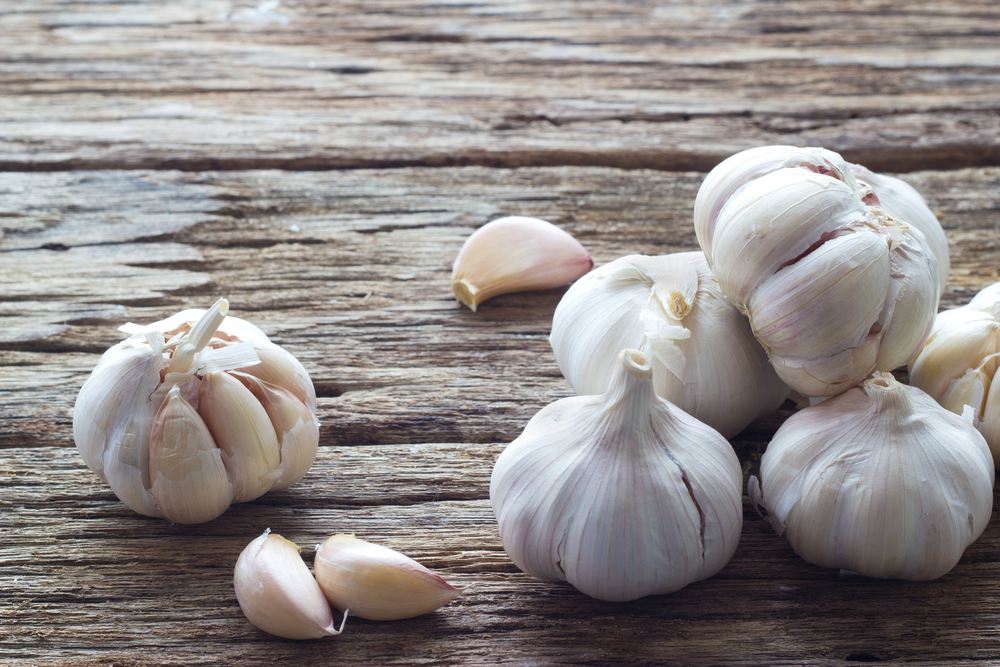
    2. GARLIC (Laśuna)

    While the Yogic diet typically minimizes (or even eliminates) garlic and onions from the diet to promote the deep and peaceful Sattvic quality for the mind that is required for deep spiritual practices (since by the way, garlic is an aphrodisiac and enhances desires,) the Ayurvedic diet actually encourages small amounts of garlic for its therapeutic and immune-boosting properties for the body.

    In addition to garlic being loaded with important minerals and vitamins like manganese, selenium, vitamin C and traces of copper, iron, phosphorus and calcium, scientists have discovered another secret to this ancient remedy’s benefits!

    A unique sulfur compound produced by garlic when crushed or chopped called allicin, garlic’s natural defense mechanism against pests, is known to have great immune-boosting benefits for humans!

    Benefits of Garlic:

    • Natural antibacterial and anti-viral properties
    • Reduce the length and frequency of the common cold
    • Powerful antioxidant benefits
    • Reduces inflammation
    • Natural expectorant
    • Cleanses Ama from the blood and lymphatics
    • Powerful rejuvenative for all the tissues

    Ayurvedic Energetics:

    • Taste (Rasa): mainly pungent, contains 5 tastes, except sour
    • Action (Virya): heating
    • Constitutions (Doshas): Balancing for vata and kapha, aggravates pitta in excess

    Suggested Use:

    • Cook with it: Cooking with fresh garlic can add some incredible immune-boosting benefits (and flavor) to your plate!
    • Make a broth: A delicious immune-boosting garlic broth can be made by peeling and crushing 2-3 garlic cloves, ½ tsp organic turmeric powder, ½ tsp ginger powder and a pinch of salt and black pepper. Boil in 4 cups of water for 10 minutes. Drink 1 cup warm 1-2 times daily for 2-3 few days.

    Tips: For the medicinal benefits of garlic, it should always be prepared and cut fresh to maintain some of the health-boosting antioxidants (versus that canned, jarred or powdered stuff— that just ain’t good…)

    Caution: People with an excess of pitta dosha (heat) eat moderately in small quantities only. Due to the blood-thinning properties of garlic, avoid an excess of garlic if bleeding disorders are present or 7-10 days before a surgery.

    Also beware, while delicious and nutritious, too much garlic can, well— make you stink!

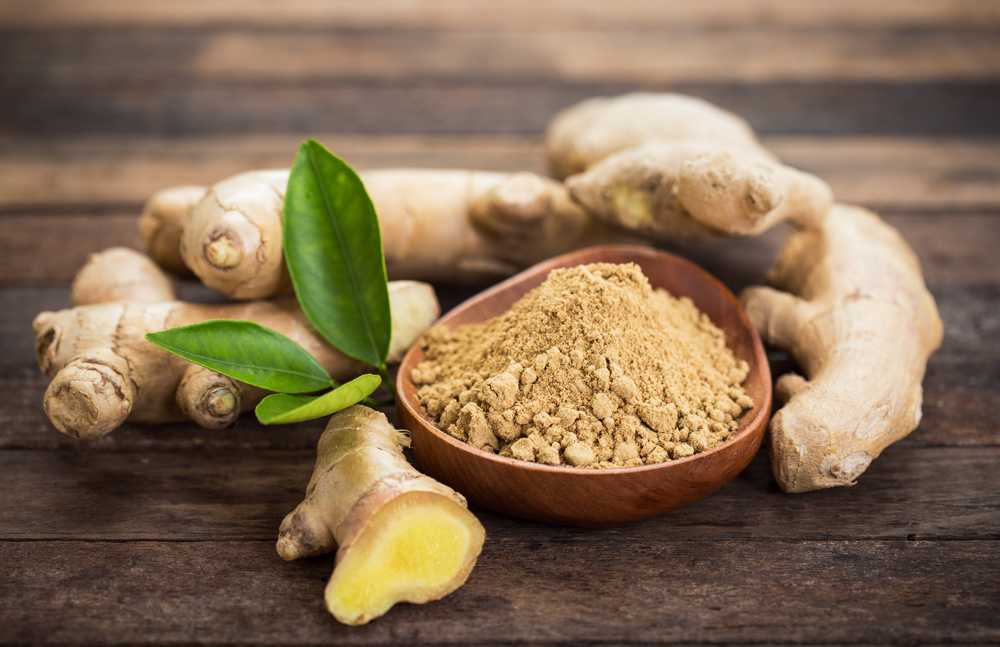
    3. GINGER (Sunthi)

    Known as “the universal medicine,” ginger is revered as a versatile super root in Ayurveda and countless other medical systems to remedy countless health concerns— from nausea to digestive complaints, to menstrual cramps and especially for colds and flu!

    The main bioactive compound in ginger known as gingerol is responsible for much of its medicinal benefits— including the ability to inhibit the growth of many bacteria and viruses.

    In addition to its incredible benefits for the immune system, Ginger is known to promote Sattva— a very positive energy that promotes health, clarity, and calmness.

    Benefits of Ginger:

    • Antibacterial properties
    • Supports proper function of the lungs
    • Supports healthy and comfortable breathing
    • Promotes healthy expectoration of the lungs
    • Encourages healthy circulation
    • Removes excess phlegm or dryness from the lungs
    • Boosts agni (digestive fire) and reduces ama (waste materials)
    • Boosts ojas (energy of vitality) for stronger immunity, vigor and strength

    Ayurvedic Energetics:

    • Taste (Rasa): pungent, sweet
    • Action (Virya): heating
    • Constitutions (Doshas): Balancing for vata and kapha, in excess may increase pitta

    Suggested Use:

    • Cook with it: Fresh or dried ginger is a great addition to your daily cooking and adds a delicious kick of spicey sweetness to your meals.
    • Make a tea: It can also be taken as a tea by boiling a few fresh ginger slices or ¼ to ½ tsp ginger powder in water for 5 minutes (or as directed by your Ayurvedic practitioner). Drink warm.
    • Gargle with it: Add ½ tsp ginger powder to hot water to one teaspoon of ginger powder. Add honey and one tablespoon of lemon juice. Honey is highly antibacterial and will coat your throat to give relief from a sore throat.

    Tips: Fresh ginger is less heating than dried ginger, so if there is already excess heat (pitta) in the body, swap for fresh ginger and consume in moderation.

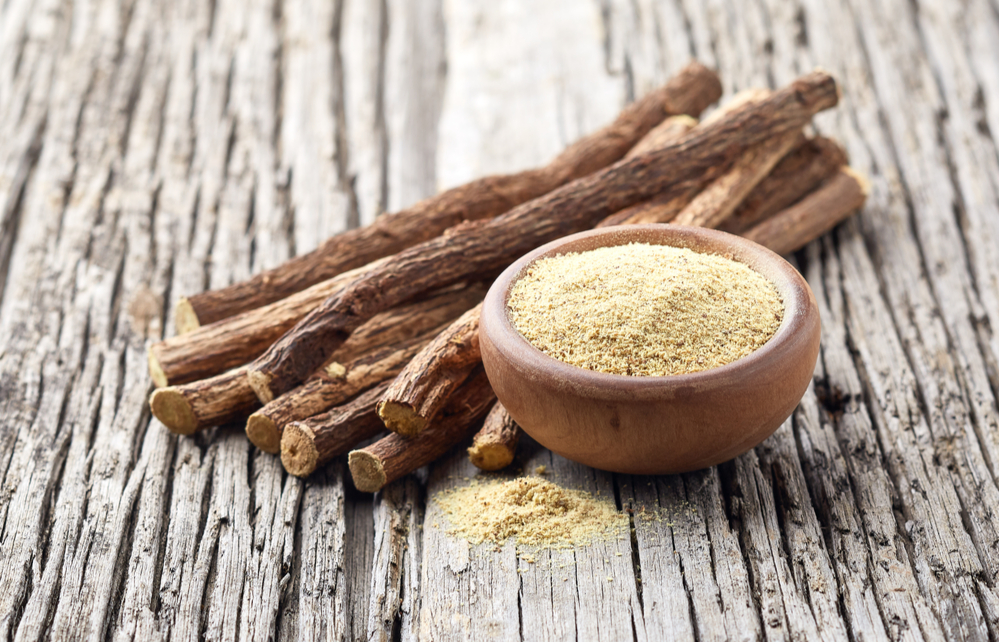
    4. LICORICE (Yashtimadhu)

    Licorice’s Sanskrit name Yashtimadhu translates to “honey-stick”.

    Numerous studies have revealed powerful antiviral, antimicrobial and anti-inflammatory qualities of licorice from its active ingredient glycyrrhizic acid.

    This sweet, soothing and Sattvic root has incredible benefits not only for the throat, lungs and immune system, but is also known to improve the voice and make the mind harmonious, calm and content by making our speech and thoughts sweet like honey.

    Benefits of Licorice:

    • Natural and effective expectorant
    • Soothes a sore or inflamed throat
    • Promotes clear, comfortable breathing
    • Liquifies cold, damp, phlegm from the lungs
    • Relieves cough by natural lubrication of the mucosal membranes
    • Supports proper function of the lungs
    • Improves overall strength and immunity
    • Boosts ojas (energy of vitality) for stronger immunity, vigor and strength

    Ayurvedic Energetics:

    • Taste (Rasa): sweet, bitter
    • Action (Virya): cooling
    • Constitutions (Doshas): Balancing for vata and pitta, may increase kapha if used long term or in excess

    Suggested Use:

    • Make a tea: A decoction can be made by boiling ¼ to ½ tsp whole licorice root in 500mL water for 5 min. Alternatively, add ¼ to ½ teaspoon of licorice root powder in warm water. Drink warm 1-2 times daily (or as directed by your Ayurvedic practitioner).
    • Chew it: Small chunks of whole licorice root (1-2g) can be washed and directly sucked on and chewed for a few minutes. Swallow the juice slowly to relieve hoarseness in the voice or a sore throat, then discard out the solids.
       
    • Gargle with it: As an anti-inflammatory, antimicrobial and anti-viral agent, gargling with licorice may provide pain relief and fights infections which cause sore throats.

      Add ¼ tsp licorice powder to 300mL warm water and gargle 10-15 seconds then spit out this mixture. Repeat until the mixture is used up. This can be done twice a day for prevention or relief from a sore throat.

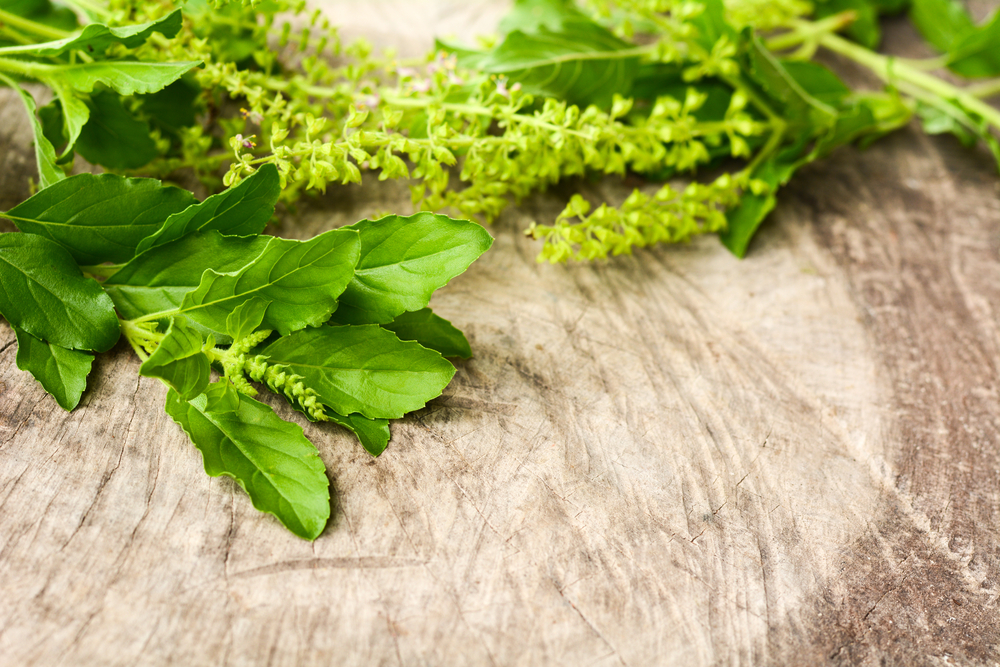
    5. HOLY BASIL (Tulsi)

    Revered as the ‘queen of herbs’ and ‘rejuvenator of life’ by Ayurvedic texts and known as the most sacred plant on earth by the Vedic Puranas (sacred Indian texts,) Tulsi (Holy Basil,) is said to be infused with both medicinal and spiritual powers.

    A highly sattvic herb, Indian tales revere Tulsi as the plant embodiment of Lakshmi, the Goddess of Light, which anoints one with lightness, clarity and abundance of health.

    Not only do the spiritual traditions revere Tulsi as an invaluable plant, but many modern-day researchers have vouched for its therapeutic benefits for immunity, lungs and healthy breathing and stress-relief.

    Benefits of Holy Basil:

    • Clear the lungs to promote healthy breathing
    • Soothe fevers
    • Reduces cough
    • Natural decongestant
    • Abundant in antioxidants for healing and recovery
    • Adaptogen— develop a healthy response to physical, mental and environmental stress
    • Boosts ojas (energy of vitality) and prana (energy of life) for stronger immunity

    Ayurvedic Energetics:

    • Taste (Rasa): pungent
    • Action (Virya): heating
    • Constitution (Doshas): Balancing for vata and kapha, in excess may increase pitta

    Suggested Use:

    • Make a tea: Add a handful of fresh Tulsi leaves or ¼ to ½ tsp Tulsi powder to hot water. Steep for 5 min and drink warm.
    • Chew the fresh leaves: If you are blessed to have access to a fresh Tulsi plant, you can harvest, wash and eat a few leaves directly or add to a salad to add a delicious flavor and health-properties.
    • Take capsules:  If the fresh leaves or dried powder is not available, encapsulated Tulsi can be taken as an immune-boosting herbal supplement as directed by your Ayurvedic Practitioner.

    STAYING WELL

    Ayurveda is a very holistic and individualized approach to health, healing and immunity. For more personalized support and guidance in what you can do to have your immune system and health humming along nicely, book an Ayurvedic Lifestyle Consultation with us.

    Remember that healthy immunity is a natural result of a healthy diet and lifestyle.

    With these tips, and Ayurvedic super plants on your side, may you be empowered in your path toward vibrant health, unshakeable strength and a thriving immune system.

    May we all make the most of this time, embrace love and take good care of yourselves and each other.

  • Bowing to the Light Within: The Real Meaning & Spiritual Significance of Your Sun Salutations

    Bowing to the Light Within: The Real Meaning & Spiritual Significance of Your Sun Salutations

    Since time immemorial, spiritual seekers from around the world have been drawn to various forms of solar practices for their profound health, mental and spiritual effects.

    If you’ve ever been to a yoga class, it’s likely you’ve encountered a yogic practice called Sun Salutations, also known as Surya Namaskara in the Sanskrit language.

    You may know Sun Salutation as the series of poses linked with the flow of the breath practiced at the beginning of a yoga class— and perhaps you’ve even heard of the tremendous health benefits to invigorate, heal and energize the body.

    However, there is so much more to Sun Salutations than a mere warm up or practice for the physical body alone.

    In this article you’ll learn the ancient secrets of Surya Namaskara— how this practice can revitalize your life plus the real meaning behind your Sun Salutations to take your practice to the next level.

    Sun Salutations are an ancient yogic practice rich in symbolism, vast in wisdom and deep in esoteric and spiritual meaning.

    ANCIENT ROOTS OF SURYA NAMASKARA

    Since the dawn of humanity, the sun has commanded a profound sense of awe and wonder. No human soul can deny the sheer beauty and magnificence the rising sun.

    Since ancient times, most wisdom traditions from around the world had various forms of sun adoration to pay homage to the source of light and life, and to invoke this solar energy within for both healing and spiritual purposes. Stories of sun worship extend back to the legends of Atlantis, ancient Egyptian wisdom, Aztecs, Incan and Mayan civilizations, indigenous cultures and far beyond.

    The practice of Surya Namaskara is one of the earliest expressions of sun adoration known to humanity which dates back thousands of years from the ancient Vedic traditions.

    Surya = Sun, Sun God
    Namaskara = salutation, adoration, offering of reverence or respect

    THE COSMIC CONNECTION

    Modern science teaches us that the sun is one of the most important influences of life on earth— responsible for most of our planets essential functioning. There would be no life without the presence of the sun illuminating the earth from the cosmos.

    In ancient traditions, the sun is considered the “Face of God”. It is the supreme source of light and life. It is a symbol of creation, the light of knowledge, and spiritual illumination. The sun is considered the original source of life force energy called Prana from which all living beings exist.

    Cosmically, the sun is a symbol of life, creation and light— the Supreme Cosmic Spirit (Brahman). On an inner level, it symbolizes our “inner sun” the light of consciousness or the soul (Jiva-Atman) depicting our divine, luminous, enlightened nature.

    Ancient texts expressed that the human being is a miniature replication of the whole world and entirety of the cosmos— a microcosm of the vast macrocosm. And within this body lives all the “rivers, seas, mountains, fields… all the stars and planets… the sun and moon… ether, air, fire, water and earth…” (Shiva Samhita II 1-3.)
     
    The yogic view is that we as humans are not separate from nature, but we are one with nature. We are nature.

    The sun we see in the sky is the same light of consciousness that shines within the hearts of all beings. We are a spark of this light from the infinite— the luminosity of our true self is a mere reflection, of this divine outer light.

    HISTORY OF THE SUN SALUTATION

    From lineage to lineage, we find countless forms and expressions of Surya Namaskara— some more devotional than physical in nature.

    In this modern age, many new variations of Sun Salutations have arisen perhaps to meet the needs and demands of such a diverse and growing population of yoga practitioners worldwide, with such diversity of bodies, abilities and intentions for practicing.

    More modern forms of Surya Namaskara such as Sun Salutation A and Sun Salutation B (primarily from the influence of Krishnamacharya and Pattabi Jois’ Ashtanga yoga,) arose perhaps as a response to the changing yoga community as a more gentle, alignment-based or athletic version of the traditional Surya Namaskara.

    The most traditional Surya Namaskara has been practiced for thousands of years, but was more recently popularized by a great saint named Swami Sivananda Saraswati. Since attaining liberation and leaving his body, his disciples lovingly taught this practice under his name as the Sivananda Sun Salutation as a tribute to their teacher and to preserve the tradition.

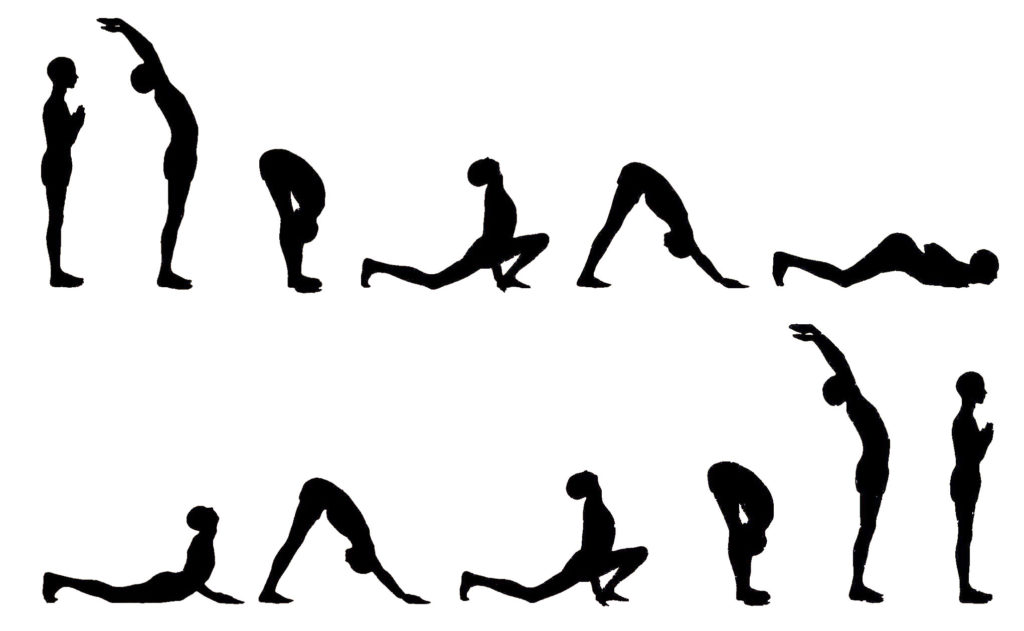
    The 12 positions of Surya Namaskara

    SYMBOLOGY OF SURYA NAMASKARA

    The deeper significance and spiritual meaning of Surya Namaskara:

    • Sun Salutation is devotional act of bowing to the Light within us
    • Sun Salutation is an offering of love & gratitude to the Light of life
    • Sun Salutation is a tribute to the Sun – the Source of Creation
    • Sun Salutation is a dialogue with the universe, enacting the dance of cosmos

    Sun Salutations are essentially prayer in motion— each pose infused with deep inner spiritual meaning, a reflection of nature’s rhythms and rooted in vast cosmic symbology.

    Slight variations of this traditional Surya Namaskara exist lineage, by lineage, however, some common key features include:

    • 12 physical postures = the journey of the sun through the 12 houses of the zodiac per year & the 12 Sanskrit names for the Sun
    • Rhythmic & cyclical nature represents the cycles of life, nature & the cosmos
    • Begins & ends with the hands in a prayer-like position in front of the heart as a gesture of gratitude or reverence
    • The bowing down action represents the bowing to the Light within
    • A full body prostration-like gesture symbolizing sweet surrender to the Light
    • The rising up action symbolizes the rising sun (within & without)

    TIPS FOR PRACTICE

    Here are some general guidelines to make the most of your Surya Namaskara practice:

    • Practice at sunrise to absorb the suns healing & energizing solar rays
    • Face east to pay homage the sun
    • Commonly practiced by transitioning only the right foot forward and back throughout (the right side of the body is connected with our positive and solar energy channel called Pingala Nadi— however, as more rounds are practiced there is no harm in alternating the right and left feet to maintain balance in the body)
    • Practice daily
      • Beginners: Start with 3 Sun Salutations per day
      • Intermediate: Try 9 or 12 rounds per day
      • Advanced: 12 or even 27 times per day
    • Practice with awareness, love & devotion towards the supreme light that dwells within & around us

    May we honor the sun each day as it rises, giving life to the world, but also its presence within us— as it reflects the boundless light and life of our own true self.

    Surya Namaskara takes on a whole new dimension when we realize the vast and spiritual nature of this ancient practice. Not only can we invigorate our bodies with healing solar energy, but through Sun Salutations, we can attune to natures rhythms, connect with the vast cosmic forces of our universe and remember the intricate connectivity of these forces to revitalize our entire life.

  • To Om or Not to Om? A Beginners Guide to Chanting

    To Om or Not to Om? A Beginners Guide to Chanting

    In our first few yoga classes, it may seem a little strange or awkward to loudly chant a funny “home” like sound before we begin our yoga practice— but with a bit of understanding and practice, you may just fall in love with the beauty and benefits of the sweet sound of Om.

    WHAT IS OM?

    Om is a sacred and powerful sound vibration known as the Pranava Mantra— it is traditionally chanted before and after spiritual practices in the yogic tradition.

    Mantras are like scientific formulas of sound vibration— each mantra known to have unique qualities, energies and effects on the body and mind. Repetition of mantras, including the sound of Om, are proven to have incredible benefits for the body, mind, and spirit. The most simple and ancient of mantras, Om is known as the sacred primordial sound. It is said in the yogic tradition that all sound is born from Om.

    Om is known as the original vibration, the underlying sound current of the universe.

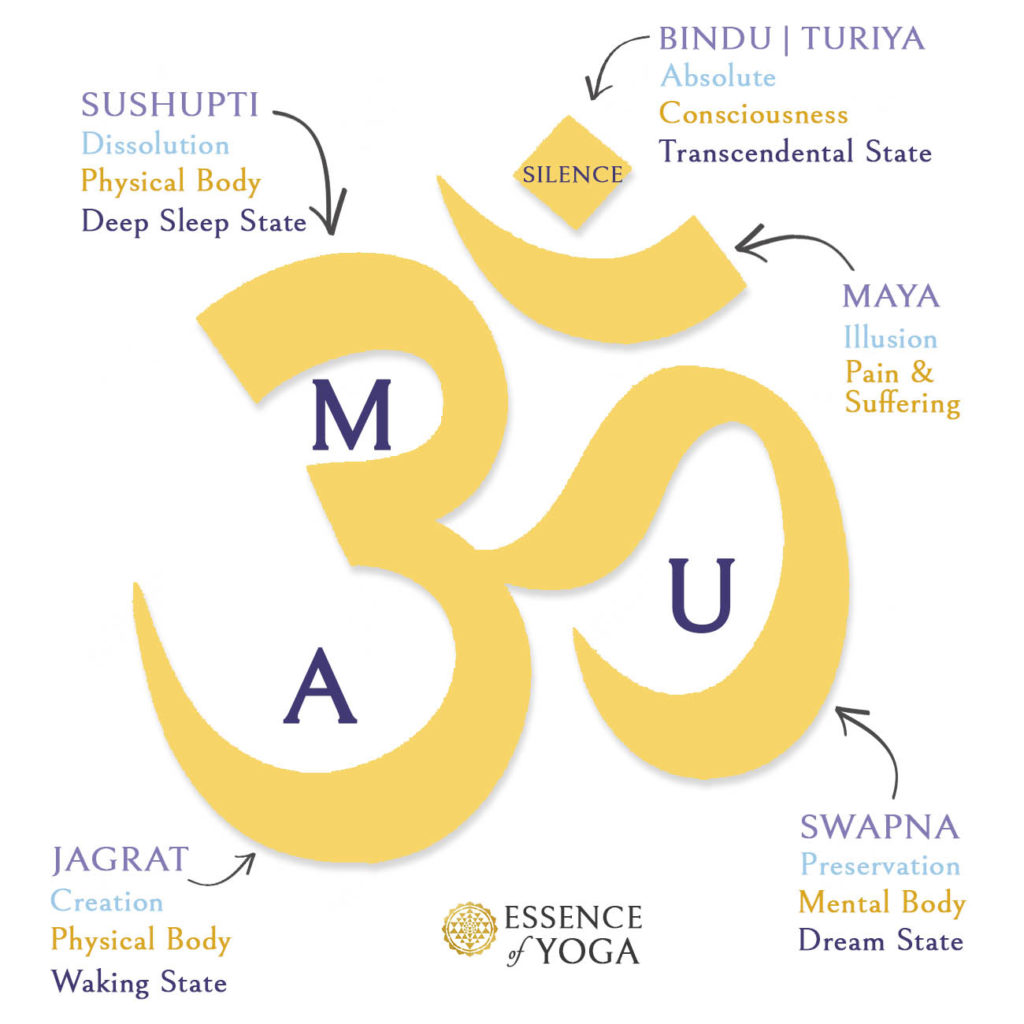
    This sacred sound is composed of three fundamental syllables – A U M, which represents the various states of awareness, and the trinity of universal energies of life known as Creation, Preservation and Dissolution.

    Within AUM, the first sound is “Ah,” then the sound “Ooh,” then “Mm,” followed by a pause of silence.

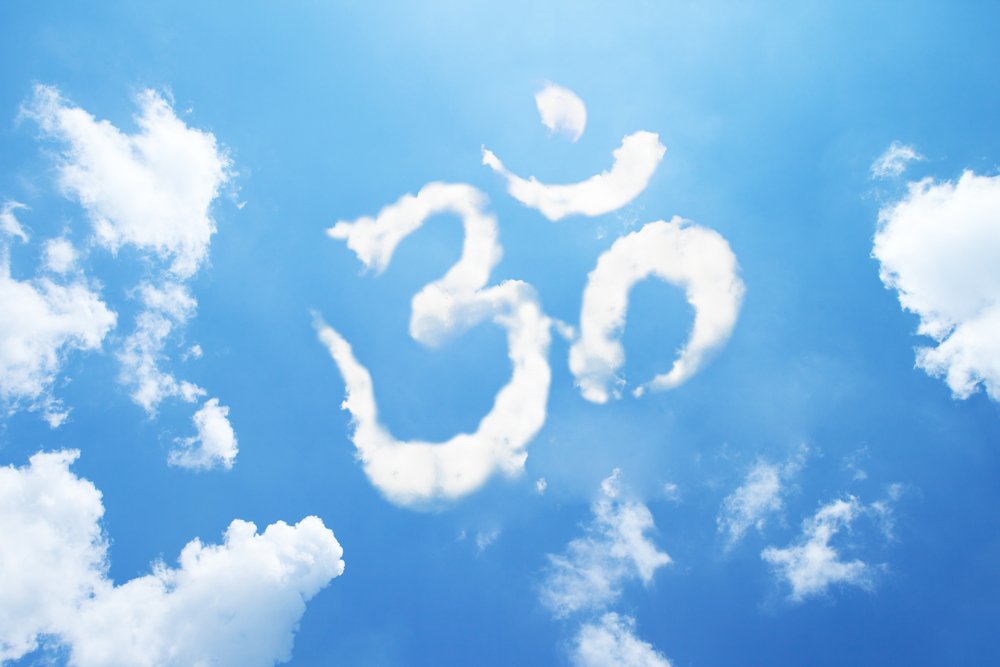
    Om Symbol

    WHY SHOULD WE CHANT OM?

    Quantum physics confirms that everything is energy. Matter is space filled with pockets of subatomic particles. All matter, all that we see, touch, feel, hear, taste and smell is simply energy, or vibration, resonating at various frequencies.

    Similarly, chanting the sound vibration of Om is vibrationally consistent with the frequency found throughout everything in nature and the universe.Om is known as the “sound of the universe,” the sacred primordial sound and original vibration. The sound of nature.

    Through chanting the sound Om, we attune the vibration of our body and mind back to it’s Natural State. Our original resonance— the sweet sound of the universe.

    By chanting Om, we are symbolically and physically tuning in to that sound frequency and remembering our connection to all living beings, nature and the universe.

    BENEFITS OF CHANTING OM

    Chanting Om is like turning on the switch to cosmic energy— it is the transmission of pure Divine Love, and therefore it is necessary to first chant Om before and after spiritual practices to both initiate and seal the energy, as well as before chanting other mantras to have the full effect.

    Mantras, including Om, are considered indestructible positive energies— meaning they remain in the cosmos indefinitely for the greater good of all and help reduce negative karmas.

    Additionally, the repetition of Om is scientifically proven to help calm the mind, balance the nervous system, evoke knowledge, assist in healing the body and mind, increase physiological alertness and synchronicity of certain biorhythms, increase health and well-being and create a single-pointed, concentrated awareness in the mind.

    HOW TO OM

    Om acts as bookends to the practice. It establishes the beginning and end of yogic or spiritual practices such as meditation, pranayama, yoga asana, or chanting other mantra. It helps to differentiate the practice from other parts of the day, and contain the energy within the practice.

    To open your yoga and spiritual practices with Om, try this:

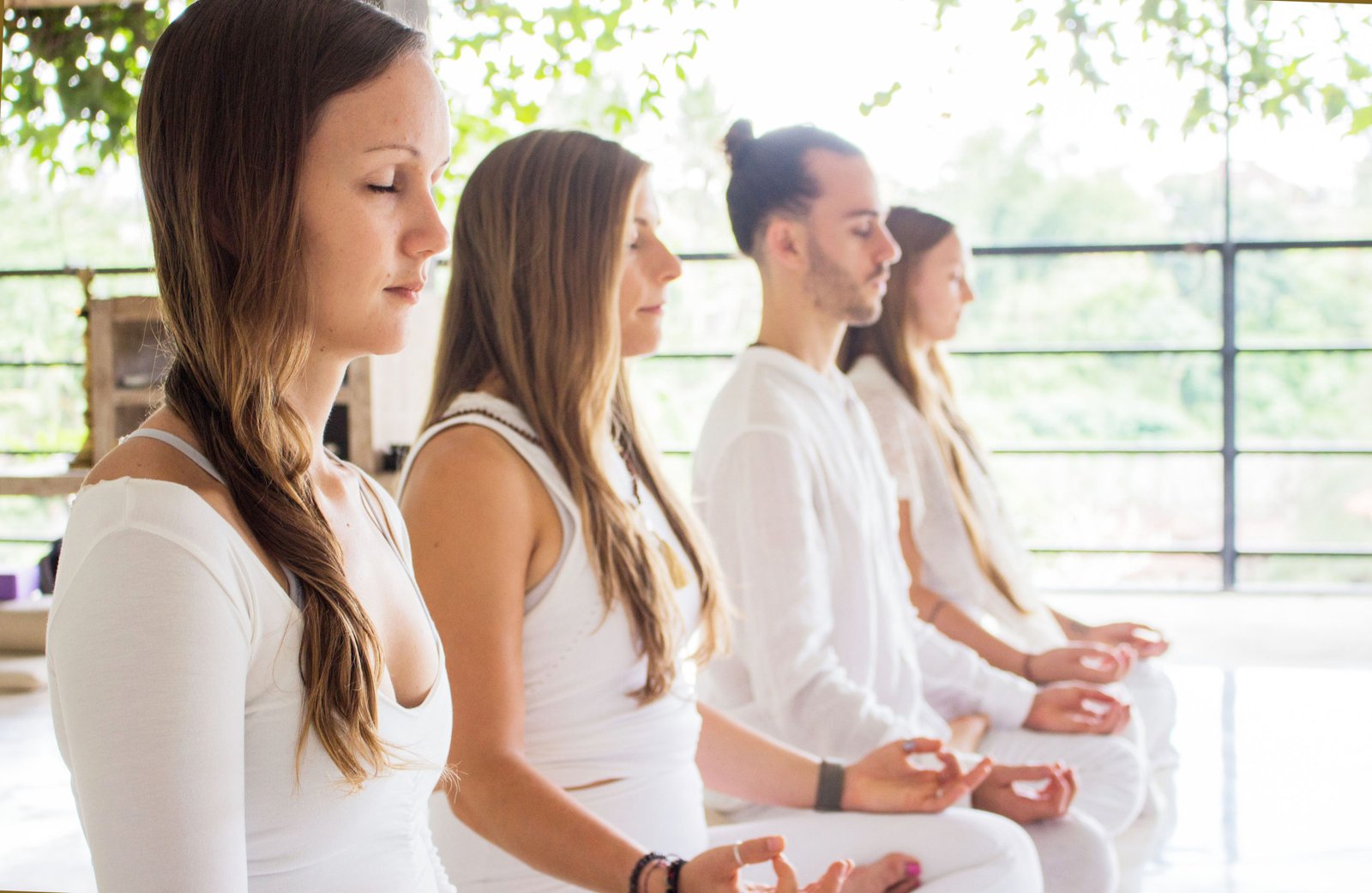
    1. Find a comfortable position with an upright spine and eyes closed.

    2. Take a moment to ground, center, focus with love and gratitude in your heart.

    3. Take a deep breath in, and on the exhale make the sound AUM (AHH, ooh, mm.)

    4. Repeat 3 times at the beginning & end of any yogic practice.

    TIPS FOR CHANTING OM

    • Begin the “AHH” sound of AUM at a lower resonance, and then raise the sound to a higher note as you sound “ooh” and “mmm.”
    • Create equal length of all three sounds A,U,M. And finish the whole sound with a pause of silence as you take your next big inhalation to create the next sound.
    • Visualize moving the vibration from the lower chakras, up and out through the crown of the head as you feel the sound raising up through your lower belly, chest and head.
    • On the “mm” sound of AUM, you may try pressing the tip of your tongue to the roof of the mouth to help rise the energy into the higher chakras.
    • When chanted with devotion, love and sincerity, the positive effects of the vibrations are catalyzed and made more powerful.

    With a greater understanding of the meaning of Om, may you receive more from your chanting, deepen your yoga practice, remember your True Nature, and return to Oneness.

  • The Meaning, Mystery & Magic Behind Your Mala Beads

    The Meaning, Mystery & Magic Behind Your Mala Beads

    Mala beads have been worn by yogis, meditation masters, enlightened saints, and sages, and spiritual seekers from all walks of life for thousands of years.

    Mala means ‘garland’ in the ancient Sanskrit language.While these Malas are very beautiful, wearing a Mala isn’t as much of a fashion statement as it is a sacred symbol of our connection with Divine.

    Traditionally, Mala beads are worn and used by seekers to enhance their meditation, contemplative, devotional and spiritual practices. Mala beads are often used to help meditators count the sacred mantras that they chant or they can also be worn around the neck as a sacred necklace for vitality and protection.

    The essence of a Mala is to support one’s inner journey and blossom one’s spiritual life— to flourish the divine virtues within, to connect our consciousness back to its source, and to enhance the practices that guide us into peace, love and truth so that we may achieve the ultimate goal of life— Self-Realization.

    There are two main ways to use your Mala:
    1. Medicine: Used for physical health & vitality and mental & emotional balance
    2. Spiritual: Used solely for spiritual purposes

    Your Medicine MalaYour Spiritual Mala
    For physical health & vitalityFor spiritual evolution
    Balance mind & emotionsSupercharges energy field with Prana
    Used for protectionUsed for Mantra Japa (Mantra chanting)
    Worn all day, everydayWorn exclusively for spiritual practices
    Can be worn in publicKept private

    WHY WEAR A MALA?

    For thousands of years yogis have worn or used Rudraksha Malas for their many protective qualities and physical, emotional and spiritual benefits.

    By using a Mala, one’s health and well-being improves, spiritual qualities flower beautifully, meditation deepens, and awareness of the Divine effortlessly expands.

    The more one wears, meditates with and cares for this powerful Mala, especially if made from the sacred Rudraksha tree seeds, the more divine energy may be attracted into one’s life for peace, truth and loving compassion.

    “The world would be at peace if everyone was wearing Rudraksha beads.”

    Papaji

    Rudraksha Malas naturally awaken a sense of peace, tranquility, compassion in our hearts— directly contributing to the peace that we all wish to see in the world.

    BENEFITS OF WEARING A RUDRAKSHA MALA

    Physical

    • Energize the body, mind & spirit
    • Promote healthy & healing
    • Establish energy, longevity & vitality
    • Balance electromagnetic field of the heart
    • Improve blood circulation and purification
    • Balance blood pressure
    • Relieves physical pain
    • Regulates the flow of bio-electric current in the body
    • Balances the respiratory, digestive, hormonal & nervous system
    • Balances the 5 elements & 3 Doshas in body

    Mental & Emotional

    • Instil a peaceful & calm mind
    • Improve concentration & memory
    • Create mental & emotional balance
    • Experience greater states of clarity
    • Feel higher states of understanding, compassion & empathy
    • Release mental negativity

    Spiritual & Energetic

    • Be filled with divine energy vibrations
    • Protection from negativity & harm
    • Attract positive & auspicious energies
    • Promote mindfulness & self-knowledge
    • Balance the subtle body – Chakras, Nadis, Koshas
    • Stimulate & awaken the Kundalini energy
    • Reduces the effects of negative Karmas

    THE MYSTERY & POWER OF RUDRAKSHA

    It is said that Lord Shiva was in deep meditation for thousands of years for the benefit of all beings, and upon opening His eyes, tears of compassion rolled down and landed upon the earth taking birth as the sacred Rudraksha tree.

    ‘RUDRA’ = another name for ‘Lord Shiva’
    ‘AKSHA’ = means ‘eyes’
    ‘MALA’ = means ‘garland’

    In this way, Rudraksha denotes those sacred seeds that came directly from the eyes of the great Lord Shiva – the Supreme Consciousness.

    The Rudraksha tree is revered as being remarkably holy and sacred and its seeds are regarded as timeless jewels of the gods, with each seed containing the secrets of the entire evolution of the cosmos within it. These seeds are a powerful gift from Mother Nature, as they constantly radiate tremendous life force energy offering the blessed wearer protective, vitality and tranquility.

    Rudrakshas have mystical and divine properties and are considered one of the most powerful aids in both medicine and in the path of Self-Realization.

  • Yes, You Can Meditate! 6 Most Common Obstacles in Meditation (And How to Overcome Them!)

    Yes, You Can Meditate! 6 Most Common Obstacles in Meditation (And How to Overcome Them!)

    You’ve tried to meditate… but you just couldn’t stop thinking, couldn’t quite sit still, you got bored, your back started to hurt and you started to doubt this whole meditation thing as being helpful. You came to the conclusion that your mind is just too darn busy and meditation just isn’t for you…

    But congratulations! Believe it or not, you actually can and did have a very successful meditation (keep reading to learn how…) But you’re certainly not alone in feeling this way.

    Along the journey of all meditators many obstacles can arise that appear to block us from finding that state of profound bliss and inner peace that meditation promises.

    In this article, we’ll demystify meditation— what meditation really is (and isn’t,) you’ll discover the 6 most common obstacles to meditation and uncover the specific solutions to overcoming them to take your practice to the next level.

    WHAT MEDITATION IS & ISN’T

    The goal of meditation is to go beyond the mind and experience our essential nature— which is described as peace, happiness and bliss. 1

    Meditation isn’t about battling the mind into making it quiet— it’s about witnessing the 70,000 thoughts the average person thinks in a day, and entering into the peaceful quietude and stillness that lies behind the thoughts.

    Meditation isn’t about stopping the thoughts inside your head. It’s about observing the thoughts, disidentifying with the thoughts, and ultimately recognizing that you are not the thoughts.

    6 COMMON OBSTACLES IN MEDITATION

    Meditation is very simple… but simple doesn’t always mean easy! Here are 6 common difficulties you may encounter while meditation and solutions on how to overcome them.

    1. BUSY MIND

    If during a meditation you’ve ever been bombarded with thought, ideas, memories, desires, fears, joys, questions, worries and more… you’re not alone!

    The average person things 70,000 thoughts per day— in 1 hour of meditation, you could think up to 3000 thoughts!

    The good news is, thoughts actually aren’t a problem— they aren’t bad or wrong to have in meditation. They are an essential part of the process. Thoughts are only a problem when you identify with the mind and react to the thoughts that it creates.

    Thoughts are only a problem, if you identify with them.

    SOLUTION FOR BUSY MIND = WITNESS CONSCIOUSNESS

    Remember, meditation is NOT about battling the mind into silence. It is about remaining as a witness to all thoughts, feelings, memories— unattached, unidentified and uninvolved. Simply allow and witness the thoughts as they arise— let them come and go.

    2. PAIN

    If you’ve sat still in meditation for more than about 5 minutes, you’ve likely encountered a prominent force called pain. Mental pain, knee pain, back pain, head pain, heart pain… so many pains arise in meditation!

    Though counterintuitive, pain can actually be a sign of progress.

    Through meditation, we undergo a process of deep purification— physical, psychological and spiritual.

    When a pain arises in meditation, meditation is not the cause, but rather, a mirror

    Ultimately, that pain you notice during meditation is always there, lying dormant in the body or mind. But due to our busy minds and distractions of the external world, we don’t always notice the pain until we become quiet, still and present enough with ourselves to truly feel the subtilties of our inner world.

    Meditation shines the light of our awareness onto precisely what we need to “work through” most to truly heal on all levels and come into greater contact with who we really are.

    SOLUTION TO PAIN = AWARENESS

    • Feel it to Heal it

      Rather than judging, analyzing or needing to change your experience, allow yourself to simply sit with the experience— breathe into it, remain as a witness, let it come and go.
    • Reacting vs Responding: The “3 Time Rule”

      Let’s be honest… most of what we experience in meditation isn’t actually pain— but rather discomfort heightened by awareness.

    • Next time you feel overwhelmed by sensation, try this:

      During your meditation the first time you notice pain, just notice it. Let your awareness of the sensation come and go. The second time you notice the pain, again, just notice it— the perception comes and goes. Now the third time you feel the pain, now respond to the bodies needs by mindfully adjusting your position.

    Meditation isn’t a game of no pain, no gain… it’s not about suppressing, reacting, or even overcoming the pain, but a delicate balance of witnessing and responding to the pain, and ultimately dissolving it.

    3. DISTRACTION

    If you’ve tried meditating before, surely you’ve encountered distractions. You know… You’re doing just fine in your meditation, sitting there peacefully, watching your breath… and suddenly the neighbor decides fires up their chainsaw… or an ambulance whirls by your house, or your phone rings…

    There are plenty of external disturbances that can easily pull you out of your meditation, this is why the great masters have taught us sensory withdrawal techniques called Pratyahara— to help us draw our sensory awareness from the external world, to the internal world.

    Ultimately, it’s not the outer sounds or even the inner thoughts that disturb you, it is your reaction to them that causes the greatest disturbance.

    SOLUTION TO DISTRACTION = INWARDNESS & NON-REACTION

    • Set yourself up for success— limit external distractions as much possible before meditating. Silence your phone, turn off the TV, close the door, do whatever it takes to minimize distractions.

    • Sensory withdrawal— meditation is difficult enough! Use all the help you can get by practicing with your eyes closed, wear earplugs or play some appropriate background softly in the background to limit external sensory distractions.

    • Accept each moment— when unavoidable distractions arise, remain as a witness. No need to analyze or judge the moment, simply notice it, accept it and allow it to be as it is.

    4. RESTLESSNESS

    Restlessness arises from anxiety, impatience, fear, agitation or boredom— anything that disables us from being present in the moment.

    Restlessness is a condition born from a mind living in the past, dwelling in the future or any other dream-like fantasy that is not here or now.

    SOLUTION TO RESTLESSNESS = PRESENCE

    • Power of presence— transform restlessness into stillness through the power of simply being here, now… and somewhere else, later.

    • Meditate first thing in the morning— while the mind is still fresh. Before checking emails, examining your to do list or fulfilling your responsibilities for the day.

    • Trust the moment— trust that you are exactly where you need to be at that moment. There’s nowhere else you need to go, nothing else you need to do… except be in this moment and allow what is, to be.

    5. FATIGUE

    Have you ever nodded off in meditation? Happens to the best of us…

    This can happen for a few reasons:

    1. You’re lacking sleep (so your body is trying to prioritize sleep, over enlightenment… makes sense!)

    2. You aren’t getting enough oxygen or prana to the brain

    3.
    You relaxed a little too much

    At the junction between concentration and relaxation, meditation happens spontaneously.

    SOLUTION TO FATIGUE = CONCENTRATION

    • Change your posture— change your body language to change your mind. Sit tall, with a long and straight spine.

    • Tighten your hand mudra— one of the secrets behind the various hand gestures (mudra) of meditation, is its ability to act as a gauge of concentration and relaxation. If you are too concentrated, naturally your hand will be stiff and cramp up. If you’re too relaxed, your fingers will open up and the position is lost. Use a bit more strength in your hand mudra to activate the brain and concentration powers.

    • Do Pranayama— do a few rounds of breathwork like Alternate Nostril Breath (Nadi Shodhana) to wake up the mind and bring fresh oxygen and prana into the body and brain.

    6. DOUBT

    “Nothing’s happening…”“Is this working?” “Ugh, I can’t do this. Maybe meditation just isn’t for me…”“Omg, I can’t stop thinking!”

    If you’ve ever thought any of the above, you’ve experienced one of the most common obstacles to meditation— doubt.

    SOLUTION TO DOUBT = TRUST

    • Have faith— in yourself, in the process, in God, science or whatever force you believe in, that meditation can, will and is helping you.

      Meditation isn’t a one time— poof! and your enlightened… It’s a gradual process— slow, subtle and ongoing. And the greatest benefits of meditation happen on the inside— invisible to the eye and often unperceivable the mind.

    • Give your practice a higher purpose— having a higher intention, and connecting with that inner meaning each time you sit to meditate, as to why you practice can help give you clarity, purpose and trust the process.

      (Bonus: if your meditation practice isn’t just about you, your health, your well-being, your peace… but for the benefit of all living beings you come into contact with!)

    FEEL MORE CALM, CLEAR & CONNECTED

    Meditations for the Soul: Guided Meditation Collection

    These beautiful, inspiring and short guided meditations will help you sink quickly and effortlessly into a state of deep relaxation while helping you deepen your self-love, inner peace and joy at the same time.

  • Sounds of Yoga: A Beginners Guide to Kirtan

    Sounds of Yoga: A Beginners Guide to Kirtan

    The word Yoga means ‘union’. Yoga refers to a state of Being that is one of Unity. It refers to the various practices that guide us into this blissful experience of Being in Oneness.

    The ultimate goal of yoga is to experience connection, union, oneness with our own True Self.

    You may be familiar with Yogic practices such as Poses (Asana), Meditation (Dhyana,) Breath Control (Pranayama.) These are all a part of a specific self-disciplinary path of yoga called Raja Yoga, in which one uses the breath, the body and mind to experience higher states of awareness, the state of Yoga – Absolute Unity.

    But Raja Yoga is not the only way… did you know there are actually three other traditional paths of yoga designed to guide the practitioner to the state of Yoga – or Liberation?

    These four paths of yoga are: 

    1. Karma Yoga, the path of selfless service
    2. Bhakthi Yoga, the path of love & devotion
    3. Raja Yoga, the familiar path of self-discipline
    4. Jnana Yoga, the path of wisdom or self-inquiry.

    Less known in western circles of yoga is the path of Bhakthi – the sweet path of love!

    Bhakthi Yoga is the sweet path of love and devotion. Love itself can be your yoga practice.

    That’s right… Love can actually be your practice. There are many common ways to practice this beautiful path of yoga including dance, ritual, ceremony, worship, pilgrimage, prayer, singing and more.

    Below, we’ll teach you one of our favourite practices of Bhakthi Yoga that helps guide practitioners home to their own True Self with ease, joy and of course… Love!

    WHAT IS KIRTAN?

    Kirtan is a simple, yet powerful spiritual practice of Bhakthi Yoga– the yoga of the Heart. Bhakthi is the Yoga of Love and Devotion, a deeply heart-opening experience, Bhakti is the cultivation of unconditional spiritual love.

    Kirtan is considered the song of the soul. It is non-dogmatic and practiced in the Universal language of Love, through the singing of ancient Sanskrit chants, Kirtan is a powerful, effortless and joyous way to connect to your heart and meditate.

    Kirtan is a celebration of life and a worship of Love. Immersed in the sound, vibration and sensations of the sacred Sanskrit chants (Mantras), the mind becomes quiet, the soul awakens and the Heart blossoms into Pure Love.

    Kirtan is another practice of yoga which helps guide our way back home— to ourselves, to the True Essence of our Being, which is Divine Love.

    It is a highly effective spiritual practice, Sadhana, which allows us to channel all of our emotional states towards The One of which we are all apart, and to lose ourselves in this Unconditional Love that unites us all.

    “Devotional singing is the spontaneous music of the soul. Nobody can resist the inspirational qualities of such music penetrating one’s heart when it is sung with concentration and devotion. Children, sing from the depth of your hearts. Let the heart melt in prayer. The joy of singing the Lord’s name is unique. This Bhajan is for us to pour out all our hearts’ accumulated dirt. Leave aside all shyness and open your heart to God.” 
    — Amritanandamayi Devi

    WHY CHANT?

    Chanting is like yoga poses for the mind and heart.

    Much like how each Yoga Asana (pose,) has unique benefits to open and heal the body, each Sanskrit chant is infused with unique vibrations to open and heal the mind & heart.

    These ancient mantras are power medicine that heal and align us from deep within.

    Much like when a child needs to take medicine, we hide it in some kind of sweet syrup. With chanting, the music is the sweet syrup that the medicine of mantra is infused in, and the silence that follows the chant is the moment we digest the medicine and allow it to heal us.

    These ancient chants contain powerful and transformative sounds and vibrations.

    Through singing them with love, we are able to experience a super conscious state of existence— kindled by intense emotion, concentration upon the mantra and immersion into the present moment.

    AWAKENING THE GOD/GODDESS WITHIN

    The nature of our True Self is Bliss. When we call out the various names of the Godly Self that dwells within us, the mind merges into its Bliss. It loses itself in that Bliss. It becomes one with the Bliss itself.

    These simple melodies invoke a deep state of peace, harmony and tranquility inside us to that help us reconnect with who we really are. Through sacred prayers of intention, gratitude and devotion we unite with the Pure Love that resides within us all.

    These ancient Vedic chants are songs of peace and they fill our hearts with love. And when we come together with devotional music and chanting, not only are we attuning ourselves to these positive vibrations of peace and love, but we are rendering a great service to the world.

    Chanting aids in humanity worldwide in its quest for peace and unity. It is a potent remedy for healing and to reconcile the illusion of separation between us. We join together with our voices, hearts and prayers or healing, joy and peace for all beings everywhere.

    WHY PRACTICE?

    Chanting is not some obscure new age musical performance… it is a valuable tool practiced by people from all walks of life from all over the world to help heal their bodies, quiet their minds, open their hearts and invite the sacred into their lives.

    The latest discoveries in neuroscience confirm the healing power and benefits of sound, particularly of devotional music.

    Below are some benefits of chanting as indicated by both modern science and the great sages and saints of India:

    • Soothes the nerves & relieves tensions
    • Balances mind & emotions
    • Improves overall health & immune system
    • Improves concentration powers
    • Supports one’s meditation practice
    • Reduces negativity in the mind
    • Purifies the environment & surroundings
    • Guides us into contentment & contemplation
    • Purifies the Nadis & Chakras & awakens the Kundalini
    • Directs emotions towards a positive goal
    • Melts the heart & fills the mind with purity
    • Generates harmony, compassion & divine love
    • Experience God – the Love of your own Divine Nature

    “If we follow the path of devotion, we can enjoy the fruit of bliss from the very beginning, whereas with the other paths, it can be tasted only towards the end. Bhakti is like the jackfruit tree that bears fruit at its very base, while one may have to climb to the top to pluck fruit from other trees.” – Amritanandamayi Devi

    Amritanandamayi Devi

    TYPES OF PRACTICES & WHAT TO EXPECT IN A PRACTICE?

    In the Bhakthi tradition, there are many types of Sangita, or Devotional Music— most commonly known in western circles are the practices known as Kirtan and Bhajan.

    Kirtan comes from the Sanskrit root Krit, which means to ‘praise’ or ‘celebrate.’

    Kirtan is a chanting practice of union through devotion that encourages the repetition of Sanskrit Mantras or Divine Names to merge into a deep meditation. It is practiced in a call & response format of which the leader, the Kirtan Wallah, calls the mantra chanted and the group responds it back. It is often experienced in a group environment and usually practiced in the ancient and holy language of Sanskrit. It is often an interactive experience of singing and can be very powerful, fun and ecstatic!

    Alternatively, Bhajan, which comes from the root word Bhaj, mean ‘sharing.’

    Bhajan is usually practiced as communal singing in a sing-a-long format. It may be experienced in a group or alone and refers to devotional songs in prayer and hymns to the divine (rather than the repetition of God’s name.) It is often more free form and less structured than a Kirtan and can be practiced in many languages.

    Both practices are not so much of a performance or concert, but rather a journey into the Self through deep listening and chanting the various names and aspects of our own Divine Nature.

    The main elements of both Kirtan and Bhajan are mantra, music and meditation— but the secret ingredient to a very a powerful practice is your own Bhakthi, love and devotion.

    Immersed in the sound, vibrations and sensations of the sacred sounds of the mantras, the mind becomes absorbed into and entrained by these vibrations, and at the end of the chant, there is a blissful silence or meditation to feel and experience the profound benefits of chanting, in which the mind becomes deeply still.

    kirtan

    HOW TO PARTICIPATE?

    Chanting is universal—you do not require any previous experience, you don’t need to know the chants ahead of time, you don’t need to be a good singer or feel coordinated with following a rhythm. More important than how it sounds, is how it feels. More valuable than knowing exactly the chants is your love and devotion when you sing them. More important that understanding the meaning of the chants or the practice, is your own Direct Experience.

    Bhakthi Yoga isn’t really something you doBhakthi is love. So practicing Bhakthi Yoga is like falling in love. And this love that we may experience isn’t new— it isn’t something you attain or achieve or become— because you are already that. But rather, it’s something you remember, something you reconnect to and stoke from deep within.

    This love is the love of the Inner Self, which through practice, we can learn to see ourselves reflected in the eyes of all beings we encounter. This is true unconditional spiritual love.

    ”One can realize God through Kirtan alone. Kirtan is singing of God’s name, with feeling. If one does Sankirtan from the bottom of one’s heart, with full bhava (devotion) and prem (love) even the trees, birds and animals will respond. They will be deeply influenced. Such is the power of Sankirtan. It brings the devotee face to face with God. The chanting of Sanskrit Kirtan, even when mechanically done, produces certain effects. When done with devotion, and awareness of the meaning, its benefits are immeasurable.” 
    – Swami Sivananda

    TIPS FOR PRACTICE

    What one puts into their practice, is what they can receive from it.

    To the degree of which one may be present, open and expressive is to the degree of which one may experience the profound nature of this practice. This is your practice, so really— anything goes. There is truly no right or wrong way to experiencing this practice!

    However, if you’re new to the practice, here is some insight into how you may choose to express yourself through the practice:

    • Sing: Singing is the heart of Kirtan. It’s not about how well you sing or how musical you are, but about how it feels. As long as your practicing with an open-heart, you’re doing it right.

    • Clap or Dance: Allow the chants to move through you and within you. You may feel inspired to clap along to the beat, tap along in your seat or get up and dance! Any physical expression of love & devotion that moves through you goes here.

    • Listen & Receive: In call and response Kirtan, hearing the names of the Divine is equally important as calling it out. When you hear the chant, hear that Divinity residing in your soul and when you call it out, feel that Divinity being expressed.
    • Meditate: Whether your singing aloud, or chanting silently in your own mind, chanting can evoke a deep sense of meditation within. During a practice you’re welcome to close your eyes and meditate – feeling the divine vibrations of sound dancing within and around you.
    • Lose Yourself in Love: Allow the magic and mystery of the chants to carry you within – to your Self, to your Source, to the Universal Love that is your True Nature.
    • Begin & end in blissful silence. Silence is the blank canvas from which the sound of music is painted upon. Beginning and ending in silence gives us a chance to deeply appreciate and experience the art of chanting

    “To gain concentration in this age of materialism, bhajan is easier than meditation. By loud singing, other distracting sounds will be overcome and concentration will be achieved. Bhajan, concentration and meditation, this is the progression. In fact, constant remembrance of God is meditation. Bhajans sung with one-pointedness, will benefit the singer, the listener and also Mother Nature. Such songs will awaken the listeners’ minds.”– Amritananda Mayi Devi

    May we all fill our Hearts with Infinite and Eternal Love as the magic of Kirtan carries us within– to our own Self, to our Source, to the Universal Love that is our True Nature and that which unites us All as One.