Author: Bindi Stables

  • How Your Mind Isn’t Designed to Make You Happy (And 4 Key Principles to Training Your Mind for Joy!)

    How Your Mind Isn’t Designed to Make You Happy (And 4 Key Principles to Training Your Mind for Joy!)

    Have you ever found yourself dwelling on an insult or fixating on your mistakes? Why past traumas can have such a lingering effect in our lives? Why a bad first impression of someone can be hard to shake? Or why a critique from someone tends to stick while a compliment just comes and goes?

    In this article we’ll explore why our mind can be our greatest obstacle to our happiness, our brain’s innate tendency to focus on the negative, how to train your mind to be ally of your happiness (and not always against it,) and four key principles on living a happier and more fulfilling life.

    There’s something very important you should know about your mind…

    Your mind is not designed to make you happy. Your mind is designed to keep you safe.

    The mind is a powerful and essential force in our lives with one primal objective— survival.

    It is wired in such a way to constantly pick up any signals of threat or danger and is designed on a fight or flight basis to keep you alive.

    It is constantly alert and sensitive towards anything that can endanger your life and it can act automatically to protect you when necessary.

    The mind’s survival circuitry is important— it keeps us safe from potential dangers or threats. (We want that!)

    BUT! The mind isn’t just about keeping your physical existence alive. It also strives to keep your perceptions of the past, your difficult memories, your sense of identity, your limiting beliefs, your ego… alive.

    Not because these things are in support of your happiness, but because they are familiar.

    According to the mind, familiar equals safe.

    The mind is more likely to stick with what is familiar (even if it doesn’t serve our happiness and wellbeing,) than to explore something that has the possibility of enhancing our happiness, that is unknown.

    Ancient wisdom says that happiness is our natural state of being. Your true self is eternally joyous and peaceful. An untrained mind, however, obstructs our ability to experience this happiness within us.

    THE NEGATIVITY BIAS

    Modern psychology and ancient wisdom agree, that the mind has a natural “negativity bias.”

    This is essentially the brain’s tendency to focus on the negative over the positive.

    We have a greater tendency to notice what’s wrong in a situation over what’s right, or what we don’t like over what we do.

    This bias toward the negative leads us to pay much more attention to bad things that happen, making them seem much more important than they really are and more significant in our memory than they need to be.

    Our brains survival circuitry is designed to keep us safe. It’s programmed to scan for threats. So it’s natural to pay more attention to the negative!

    This negativity bias is why we’re more likely to:

    • Remember a criticism over a compliment.
    • Read negative news headlines over positive ones.
    • Recall insults better than we can praise.
    • React emotionally to a negative event than a positive one.
    • Remember traumatic memories more than positive ones.
    • Think about what worries us more than what brings us happiness.

    TRANSFORMING THE MIND

    The struggles we face are very real… But let’s be honest! Much of what we stress about in our minds isn’t based on fact, reality or even likelihood.

    Minds have a way of magnifying problems and making it harder to find solutions.

    With the mind always trying to keep us safe, it can keep also keep us stuck with negative beliefs, limiting thoughts, distorted or incomplete memories and habitual patterns that ultimately don’t serve our happiness.

    But fortunately! While the brain may be hardwired in this way, we have the power to upgrade its software…

    We have the ability to change, rewire and train our minds to be less of an obstacle to our happiness and to become an ally of it.
     
    True growth and cultivating happiness is about…

    1) Understanding the nature of our mind.
    2) Strengthening our relationship to our mind.
    3) Training our mind to be in support of our happiness (and not always against it!)

    We can change our brains. Through training and practice, we can shape how we experience ourselves, our minds and our lives and find greater happiness and peace (that’s often hidden beneath the surface of our brain’s negativity bias!)

    4 KEY PRINCIPLES FOR A HAPPIER MIND

    Here are 4 key principles to start to transform your mind for the happier.

    1) PRESENCE:

    Being present naturally calms the mind and improves our mood. A distracted mind is an agitated mind. Staying present helps us to navigate negative experiences with more ease and enjoy positive experiences more deeply.

    2) AWARENESS:

    Become a sort of observer of your mind. Notice your thoughts throughout the day and how situations make you feel.

    Our mind’s negativity bias has a powerful impact on how we experience the world (and naturally takes a toll on our happiness!)

    Simply being aware of it empowers you to understand your mind more clearly, recognize your mind’s natural tendency towards negativity, and not take everything you think too seriously so you can consciously elevate your happiness.

    3) REFRAME:

    The way you talk to yourself about situations, experiences and even other people has a massive impact on how you interpret and remember these events.

    If you notice yourself ruminating over something in a negative way or only remembering the challenging aspects of a situation, see if you could reframe that event in a more realistic light.

    For example… Say you had a great day at work. But a co-worker made a comment that you found irritating. You find yourself replaying that moment in your mind the rest of the day.

    You get home from work and someone asks how your day was— you reply “terrible.” Even though your day was overall great despite that one incident.

    It’s not about bypassing things that disturb us, ignoring potential dangers or living in an unrealistic positivity bubble all the time (don’t do that!)

    Since unhappy moments naturally stick more deeply with us, it’s about refocusing to give fair and equal weight to genuinely happy moments to give a greater perspective on your life.
     
    4) AMPLIFY:

    Knowing that it simply takes more to remember positive experiences, pay extra attention to good things that happen.

    Perceived negative experiences are quickly transferred and stored into your long-term memory. Positive ones require more active effort to remember clearly.

    So take a few more seconds to fully enjoy that hug. Really savor that sunset. Really take in that loving compliment.

    Focus on the feeling of happiness, joy or peace in beautiful moments throughout the day to amplify them in your mind.

    It’s not about how long you enjoy that experience, but how deeply you enjoy it that matters.


    If you’re ready to deepen your self-love, step into your power, transform your mind, tune into your inner wisdom, live your purpose and embody your highest self…

    DIVE DEEPER WITH 1:1 MINDSET & EMPOWERMENT COACHING

    Check out our new 6-Week Mindset & Empowerment Coaching immersion for a holistic approach to personal growth, healing and transformation to help you navigate your way from what’s holding you back to a life of fulfilment, freedom, purpose and joy. 
  • Ancient Vedic Practices to Clear and Energize Any Space

    Ancient Vedic Practices to Clear and Energize Any Space

    Have you ever walked into a space and got a really good vibe?

    My bet is that the place felt harmonious, balanced and tranquil in one way or another.

    On the other hand, have you ever entered a space and got a really heavy vibe? Perhaps you can’t place your finger on exactly what it was that you felt, but just that something was thick?

    From an energetic perspective, what you may have felt in the latter can be explained by what Vedic traditions call tamas— the energy of dullness and inertia.

    WHAT IS THAT “VIBE?”

    An abundance of tamas in an environment can be experienced as a palpable sense of darkness, heaviness, lethargy or negativity in a space. The energy may feel thick or stagnant.

    Now— tamas isn’t necessarily a bad thing. It’s simply a natural quality of energy. It’s one of three qualities of matter (Triguna,) along with rajas, the dynamic energy of activity, and sattva the energy of purity.

    One explanation as to how tamas can accumulate in a space is from a shift in the organic balance of the five elements of nature—the Pancha Maha Bhutas, of earth, water, fire, air and space— towards an excess of the earth element.

    Too much earth element, or tamas, in an environment makes things feel heavy, dull, dark, stagnant, or negative.

    This tamasic energy is essential in some places— such as the bedroom as we need this heavy, dull energy to help us sleep at night!

    However, too much tamas in a space can be felt through the senses and can influence the mind and make us feel lethargic, heavy and quite frankly, down, negative or depressed.

    7 VEDIC PRACTICES FOR CLEARING & UPLIFTING YOUR SPACE

    Whether you want to encourage more positive energy into your home or you seek some tools to shift the vibe of a dull or stagnant space, here are some tips to promote peace, balance and sattva in any environment.

    1. CLEAN AND CLEAR

    Start by simply cleaning up the space. Dust and debris are said to be tamasic in nature and attract a dull, lethargic and heavy energy.

    Wiping down all surfaces, taking down cobwebs and sweeping up any debris is a key step to clear the energy in your space.

    2. OPEN UP AND LET THE SUNSHINE IN

    Tamas naturally has a cold, dark and damp quality to it.

    To dispel this darkness, open up the windows, allow some fresh air to circulate and invite the sunshine in!

    Make a habit of every morning opening up the curtains and allowing the morning sunlight to enter into your home.

    Light drives out darkness and has an uplifting effect on both your mind and your space.

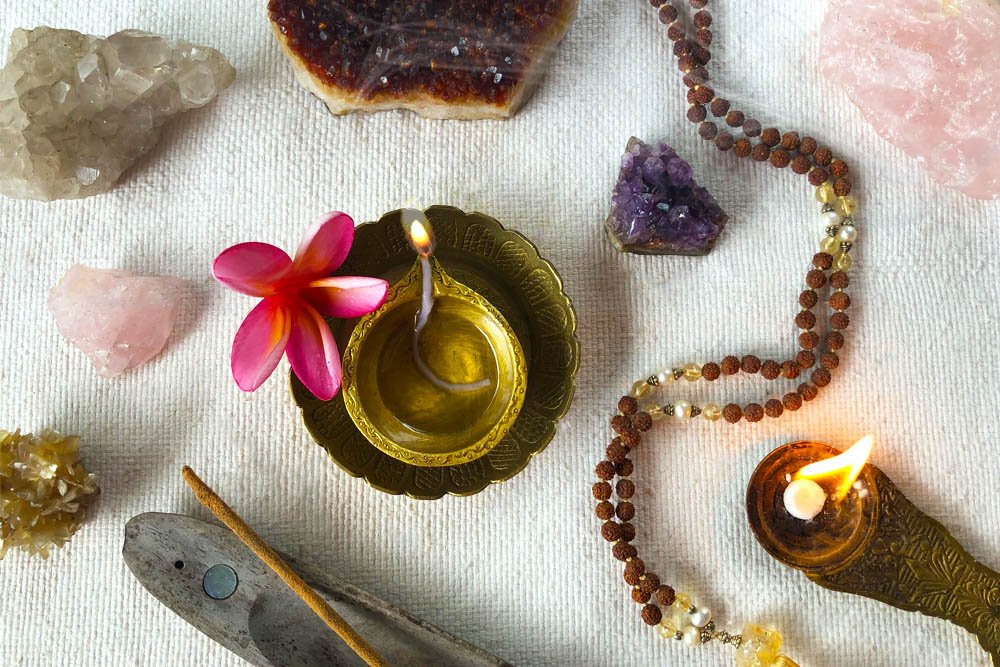
    3. LIGHT UP INCENSE

    Burning incense helps clear out any dense energies in a space and purify the air element (Vayu Bhuta,) which has an uplifting effect on the senses.

    Natural incense made of sacred plants, resins and herbs emanate a divine fragrance known to attract positive energies, promote a balanced and peaceful atmosphere and cultivate Sattva in the mind.

    Alternatively, you can diffuse or burn the natural aromas of essential oils from auspicious plants like rose, jasmine, sandalwood or frankincense.

    Tip: Make sure the incense you are burning is natural and not chemical based!

    4. LIGHT A LAMP

    In Vedic traditions, it is common practice to light an oil lamp known as a deepam or diya, in the home every morning and evening. 

    Lighting a candle or deepam naturally drives out darkness (tamas,) in any space and attracts pure and positive vibrations (sattva.)

    By lighting a lamp, we purify the fire element in the surrounding environment and invoke auspiciousness, goodness and purity into the space. This light illuminates the mind and brightens the senses.

    5. BURN CAMPHOR OR SACRED RESINS

    Camphor is like the “sage” of the Vedic tradition.

    It symbolizes a strong connection with the sacred. It offers an ethereal and divine feeling of tranquillity.

    When burnt or diffused, its fumes are said to possess the power to redefine your surroundings by releasing healing energies, dissolving dense energies and magnifying positive ones.

    Alternatives: As another option, you can burn Sambrani (gum benzoin,) frankincense or myrrh resin for a similar effect.

    6. SACRED SOUND (MANTRA)

    Chanting of Sanskrit mantras is a powerful way to clear the energy of a space and raise its energetic vibration. These powerful and healing sounds break apart stagnant or heavy energies in an environment and transform our state of mind.

    Any mantra you connect with can be useful— below are two excellent mantras you can use to remove obstacles and enliven the energy of your physical space.

    Ganesha Mantra: Om Gam Ganapatayai Namaha

    Gayatri Mantra:
    Om Bhur Bhuvah Swaha
    Tat Savitur Varenyam
    Bhargo Devasya Dheemahi
    Dhiyo Yonah Prachodayat

    Bonus: You can play mantras or mantra-based music softly in the background of your home throughout the day or night to infuse your space with divine sound vibrations and maintain its positive energy!

    7. RING A BELL OR BOWL

    Ringing a bell creates sound waves that drive out negative energy— an ancient practice commonly found in Vedic ceremonies and Hindu temples that is known to sanctify all five elements in any space.

    You can also use a Tibetan singing bowl or Tingshas to create a healing effect with gentle vibrations that can be felt on both a physical and spiritual level.

    Bonus: As a daily practice, you can ring a bell or singing bowl when you light a lamp on your altar every morning or evening.

    With these simple practices, you can clear, balance and energize your personal spaces, enlighten your atmosphere and awaken peace in your mind, heart and home!

  • Moon Wisdom: A Yogic Guide to Harnessing the Full Moon Energy

    Moon Wisdom: A Yogic Guide to Harnessing the Full Moon Energy

    Since the dawn of humanity, the moon has illuminated a sense of awe, beauty and wonder in the human mind. One cannot deny the sheer beauty and magnificence of a luminous full moon.

    However, yogic wisdom reveals to us that there’s more to the moon than meets the eye…

    Life on earth is deeply influenced by the lunar cycle in the cosmos above. Since the beginning of time, many spiritual cultures around the world have based their calendars, seasonal farming practices, day to day activities, and most importantly, their spiritual practices upon the lunar cycle for the greatest benefit.

    Spiritual seekers have known of the profound connection between the events happening in the cosmos above, the events happening here on earth in nature, as well as the inner events happening within the body and mind of living beings.

    Yogic science reveals the deepest secrets of the moon, the significance of the lunar phases and ancient rituals to harness the power of the moon for greater vitality, inner balance, lucidity and spiritual remembrance.

    Here you’ll discover the secret yogic knowledge of the moon and the specific ancient practices and rituals to help you connect to the power of the moon to enhance all aspects of your life.

    THE MOON & EARTH CONNECTION

    Modern science confirms what yogis have known for millennia— there is an undeniable and profound link of the moon and lunar cycle with life and the natural events happening on earth.

    The moon is responsible for some of our planets most essential functioning— the ebb and flow of the ocean tides in response to the waxing and waning of the moon, the moons influence on gravity and its role in regulating day and night, the seasons, weather and climate throughout the planet.

    In Vedic traditions, the moon is known as the “Queen of the Cosmos” and is considered the gateway to the astral worlds. 1

    The moon is a symbol of the cosmic feminine and creative force that sustains life called Prana Shakthi. It represents the flow and cycles of life— the tides, weather, nature, night and day, the seasons. On an inner level, it reflects the mind, emotions, sensitivity, receptivity and divine feminine nature.

    The yogic view is that we as humans are not separate from nature— we are nature.

    And that the cosmic energy of both the sun and moon live within us as subtle energy currents in the solar and lunar channels that run to the right and left side of the spine called Pingala or Surya Nadi and Ida or Chandra Nadi respectively.

    SECRET KNOWLEDGE OF THE MOON: CHANDRA VIDYA

    Chandra Vidya is a lunar science— the science of the mystical moon; also known as Soma Vidya. The first reference to this science is found in the tenth book of the Rig Veda, and is later elaborated in the Upanishads and tantric texts.2

    Chandra = moon, lunar, shining, God of the Moon
    Vidya = science, knowledge (secret or subtle)

    SIGNIFICANCE OF THE FULL MOON (PURNIMA)

    The full moon, also known as Purnima, offers a very unique energetic effect to the body, mind and earth because of a very particular alignment of the sun, earth and moon.

    At 12:00 midnight, the sun is located directly below us on earth, and the moon straight above us—exactly opposite of one another with the earth aligned in the middle. At this time, the energy of the sun and moon are in perfect balance and harmony in the cosmos, which influences our inner solar and lunar subtle currents supports helping us establish inner balance, equanimity and harmony within.

    Normally, solar energy is concentrated in the head, which makes the mind active, extroverted and often restless. On full moon days however, the moon above us and pulls the lunar energy of the body upwards while the sun below pulls the solar energy downwards towards the base of the spine— this bathes the brain and nervous system with the cooling rays of the moon from within and above which makes the mind calm, clear and receptive.

    This energy is invisible and mostly imperceptible to us and although we may not be aware of it, our own biological and energetic rhythms are nonetheless deeply affected by it. 

    Of all the lunar phases, the full moon is considered the most auspicious, powerful and lucid times of the month for spiritual practices.

    During full moon time yogis can reap the following benefits:

    • Easier, calmer & more lucid meditations
    • Greater concentration & mental clarity
    • Improved health & vitality
    • Body is super-charged with of cosmic energy called Prana Shakthi
    • Balance of solar & lunar energy in subtle channels (Ida & Pingala) for a balanced body & mind
    • Reversal of the flow of upward moving energy (Prana), & downward moving energy (Apana) to awaken and contain spiritual energy within called Kundalini Shakthi

    5 SACRED FULL MOON PRACTICES & RITUALS

    This full moon, try these practices and rituals to help you harness the power of the full moon for more vitality, tranquility and spiritual remembrance.

    1. MOON BATHING

      There is an ancient yogic and Ayurvedic practice that involves going out under the moonlight and “bathing” in the magical lunar rays above and within.

      This practice is very cooling, soothing and balancing especially for women as it helps balance hormones and people with excess Pitta (too much heat in the body.)

      Note: The exception is eclipses. On eclipses, Vedic wisdom advises against exposing yourself to the harmful rays of the sun or moon being eclipsed!

    2. MEDITATE

      Take time to close your eyes and be still. Any meditation practice you like is great, or you can follow along with this meditation from Bihar School of Yoga.

      Centre yourself with the breath, then bring your attention to the third eye centre, between the eyebrows. Visualise a full moon on a clear night sky at this third-eye point, brightly shining on the waves of the ocean. See the images clearly, and observe the light of the silvery moon dancing across rippling waters or the crashing ocean waves. Become aware of the feelings and sensations within you, and touch the mystery of the natural world from within.3

    3. ALTERNATE NOSTRIL BREATH

      Also known as Nadi Shodhana Pranayama, regulates and balances the bodies sun (Pingala,) and moon (Ida,) channels and equalizes both hemispheres of the brain for greater mental balance, clarity and deeper meditation.

    4. YOGA ASANA

      Try a few slow, mindful, meditative rounds of Moon Salutations, Chandra Namaskar as outlined by the Bihar School of Yoga to connect with the lunar rhythms within and above.4

    5. CHANT MANTRA

      Try this lunar mantra helps us to connect with the powerful full moon energies and awakens lunar energy within us. Chant 3, 9, 27, 54 or 108 times for the greatest effect.

    Om Aim Klim Somaya Namaha

    May we connect with the divine luminosity of the moonlight and unite with its presence within us as the divine light of our own true self.

    Remember your connection to the cosmos this full moon. Recharge your body and mind and unite with the spiritual essence that pervades us all.

  • 6 Ayurvedic Daily Habits to Align Your Day to Nature’s Rhythms (And Optimize Health and Happiness!)

    6 Ayurvedic Daily Habits to Align Your Day to Nature’s Rhythms (And Optimize Health and Happiness!)

    Living in alignment with nature’s rhythms and cycles is key to cultivating inner balance, robust health and optimizing every area of your life.

    There is a natural ebb and flow within the natural world, including within your own body and mind.

    According to Ayurveda, the three bio-energies, Vata, Pitta and Kapha are natural forces that govern the rhythms of life at large as well as your own biological life.

    Each bio-energy or Dosha, is activated at different parts of the day making certain activities more natural, easy and effective at particular times of the day.

    By understanding these forces, you can tune into the inherent rhythms of nature, and make informed choices to help steer your life towards health, harmony and happiness.

    WHICH DOSHA IS ACTIVE AT WHAT TIME OF THE DAY?

    According to Ayurveda, each four-hour time period is dominated by one of the three bio-energies and thus influenced by the qualities of that Dosha.

    These time periods are known as Vata Kala, Pitta Kala and Kapha Kala.

    They are each activated twice-daily – once from dawn to dusk and then repeat again once from dusk to dawn.

    In other words, there’s a Vata, Pitta and Kapha time of day and a Vata, Pitta and Kapha time of night.

    The following Doshas govern the following times of the day and activate the unique energies of that Dosha:

    • 6:00am – 10:00am = Kapha Kala
    • 10:00am – 2:00pm = Pitta Kala
    • 2:00pm – 6:00pm = Vata Kala

    And then they repeat again through the night:

    • 6:00pm – 10:00pm = Kapha Kala
    • 10:00pm – 2:00am = Pitta Kala
    • 2:00am – 6:00am = Vata Kala

    Note: These exact times of each Kala can vary based on the season you’re in and the sunrise/sunset times of your specific location.

    You can support your biological rhythm and optimize all realms of your life by aligning your daily activities such as when you wake up, exercise, work, eat and sleep to nature’s rhythms.

    THE AYURVEDIC DAILY ROUTINE

    The Ayurvedic daily routine known as Dinacharya is a powerful step to bring radical change in body, mind, and consciousness.

    • Dina = Day
    • Charya = routine/regimen

    The optimal times for all daily activities such as self-care, exercise, meals, work, communication, play, sleep and more are all outlined through the daily Ayurvedic routine.

    The various self-care practices help to establish balance in our constitution, help prevent disease and keep the channels of the body clear.

    Living our daily life in alignment with nature’s rhythms regularizes our biological clock and in turn supports all body systems from digestion to hormones to stress levels and beyond.

    DAILY HABITS TO ALIGN YOUR DAY WITH NATURE AND OPTIMIZE YOUR LIFE

    1. Wake up early (Brahma Muhurta)

      Waking up during Vata Kala by or before 6 am is considered the optimal time to awaken as the energetic qualities of nature and in the body reflect those of Vata– light, clear, energetic and expansive.

      Hitting the snooze button and sleeping into Kapha Kala, after the sun rises, we may find it harder to get up and rolling and bring the energetic qualities of Kapha with us into the day making us feel groggy, heavy, lethargic, slow and dull.

      Early rising gives us a clear, fresh start and an energized start to the day!
    2. Morning self-care and exercise practices (Dinacharya)

      Kapha Kala (between 6-10 am,) is a great time to nurture, nourish and cleanse the body.

      This time of day is also considered the most ideal time for exercise to counteract some of the dull, heavy Kapha energy from sleep and to energize the body and mind for the day.

      Daily Ayurvedic self-care practices such as tongue scraping, oil pulling, dry body brushing, self-oil massage, a daily yoga practice etc are a great place to start!
    3. Eat a light, simple breakfast

      During Kapha Kala, our digestive power tends to be more sluggish and slow.

      Eating a light, easy to digest and generally well-spiced breakfast gives us the energy we need to start the day without overwhelming the digestive system too early in the day.

      Fresh ginger tea is a great way to kindle digestion during the morning to keep us feeling light, fresh and clear all day!
    4. Enjoy your largest meal at midday

      When the sun is at its peak in the day around noon, our body’s inner fire is a also at its peak.

      During Pitta Kala, around midday, our digestive fire (Agni,) appetite, digestive secretions, assimilation power and metabolism are strongest.

      Unlike how many western populations eat (large breakfast, tiny lunch of soup or salad and massive dinner,) Ayurveda says we are biologically equipped to have our largest, most dense and substantial meal at midday!
    5. Eat a light, easy to digest dinner

      As the vibrant energy of the sun begins to set throughout the day, our digestive fire also begins to reduce.

      Generally, dinner is the lightest meal of the day according to Ayurveda.

      Soups, light vegetable dishes or a smaller version of lunch is a great dinner.

      It should be eaten towards the end of Vata Kala or at the beginning of Kapha Kala (generally between 5-7 pm) for the best digestive effect and for digestion to not interfere with sleep.
    6. Go to bed early

      Since the qualities of Kapha (heavy, lethargic and dull,) are most supportive of a good night’s sleep, Ayurveda advises going to bed during Kapha Kala by or before 10 pm (or by 11 pm at the latest!)

      After 10 pm, we go through a second Pitta period, which can ignite a “second wind” of Pittas energy, motivation, organization and hunger making it difficult to fall asleep the later it gets.

      Going to bed early helps us fall asleep, stay asleep and wake up feeling refreshed the next day!

    By aligning your daily habits to nature’s rhythms, and with the help of these six basic tips, you have the ancient Ayurvedic wisdom to truly optimize your health, happiness and success in all areas of your life!

    If you’d like to dive deeper into this subject of self-care, self-healing and the Ayurvedic daily routine:

    DIVE DEEPER WITH A PRIVATE AYURVEDIC ASSESSMENT & CONSULTATION

    Contact us to book a private Ayurvedic Assessment and Consultation to determine your unique mind-body type, receive an assessment of your current condition and develop a customized wellness plan with unique nutrition guidance, daily routine, treatments, herbal remedies, and more to experience greater vitality and support sound sleep!

  • The Secret Power of Mantra

    The Secret Power of Mantra

    Mantras are powerful sacred sound vibrations from the ancient Sanskrit language that are traditionally chanted during spiritual practices in the yogic tradition.

    The word Mantra comes from two Sanskrit root words:

    Manas = mind
    Tra = to protect, to free from

    Mantra means that which protects and frees the mind!

    Each sound syllable inside the mantra is infused with unique frequencies— much like scientific formulas of sound vibration known to have unique qualities, energies and effects upon the mind.

    Mantras act like secret passwords to various aspects of our inner dimension. They are said to hold subtle knowledge in their vibration and cleanse the body, mind and spirit.

    SUPERPOWERS OF MANTRA

    Repetition of a Mantra is proven to have incredible benefits for the body, mind, and spirit. A regular Mantra chanting practice is known to:

    • Calm the mind
    • Promote love and compassion
    • Regulate the nervous system
    • Improve concentration powers
    • Evoke knowledge
    • Assist in healing the body and mind
    • Increase energy, inner clarity and attention span
    • Activate the vagus nerve
    • Synchronize biorhythms
    • Promote health, happiness and well-being

    Spiritually, Mantras are considered indestructible positive energies— meaning they remain in the cosmos indefinitely for the greater good of all; helping to reduce negative karmas.

    The physical, mental, spiritual benefits and positive effects of chanting sacred mantras are infinite and powerful for both the individual and all beings everywhere.

    UNLOCK THE TRUE POTENTIAL OF MANTRAS

    Here are a few tips to make the most of your Mantra chanting practices.

    1) Intention

    Chanting Mantra with the deepest integrity of intent— with devotion, love, concentration, faith, awareness, commitment and sincerity catalyzes the positive effects of the vibrations and are made more powerful than chanting mechanically.

    Close your eyes and chant Mantra straight from your heart.

    2) Open with Om

    Om, the Pranava Mantra, is an incredibly simple but powerful sacred Mantra. It is traditionally chanted before and after spiritual practices in the yogic tradition. Om is known as the sacred primordial sound, it is said in the yogic tradition that all sound is born from Om.

    Chanting Om before chanting other Mantras acts as a primer for the others. Its resonance activates all other Mantras and makes them more powerful.

    It’s vibration is like turning on a switch to receiving cosmic energy— it is the transmission of pure Divine Love.

    It is necessary to both chant Om before and after spiritual practices to both initiate and seal the energy, as well as before chanting other mantras to have the full effect.

    3) Correctness

    Mantras may be chanted aloud, whispered at the lips or silently within, and are made more impactful when recited with correct pronunciation, rhythm and pace.

    Learning from a highly knowledgeable teacher or guru can help you understand how to chant mantras correctly so you can receive more from your Mantra practices.

    4) Repetition

    The yogic tradition has specific numbers that are considered auspicious for chanting mantra. Repeating your Mantra 3, 9, 27, 54 or 108 times is considered ideal and complete in the yogic tradition for many reasons with great symbolism.

    Authentic prayer beads (Malas,) will have 54 or 108 beads to help you count to higher numbers of mantra repetition.

    5) Initiation

    When you are initiated to a Mantra from an enlightened teacher or Guru, the power of the mantra is said to increase immensely.

    Initiation, or Mantra Diksha, is like unlocking the gate to the Mantra’s full energetic potential and attunes the initiated one to its divine energies.

    6) Practice

    Practice daily! Develop a regular Mantra Sadhana (Mantra practice) to increase the power of and collect the energy from the Mantras.

    You may chant mantra during your daily yoga or meditation practice or as its own practice.

    With love, practice, and intention, invite the secret power of mantras into your life and daily practice and experience the great benefit it has to offer you and to all.

  • The 5 Superpowers of Meditation During Challenging Times

    The 5 Superpowers of Meditation During Challenging Times

    Meditation is proven to have countless benefits to uplift all areas of your life.

    Here are some unique “superpowers” of meditation to support you through challenging, stressful or uncertain times.

    5 BENEFITS OF MEDITATION

    1. REDUCE STRESS & ANXIETY

    Countless studies have shown that meditation and mindfulness techniques can help reduce anxiety and stress.

    By boosting emotional resilience and reducing stress hormones in the body, we naturally become less reactive and knocked down by stressful situations.

    Meditation can’t stop stressors from entering your life…

    Meditation can’t give you your job back. It can’t fix your relationship. It can’t pay your bills.

    But it can help give you a strong emotional foundation to respond to the stresses of life’s challenges with more ease and grace.

    2. IMPROVE FOCUS, DECISION-MAKING & INNER CLARITY

    Meditating trains the mind to be present. The present moment is the only place where we can act, and create positive meaningful change in our lives and the lives of others.

    Every time you meditate, you sharpen your attention and focus.

    With improved focus, we naturally become clearer in our decisions, more precise in our actions, and more effective in creating positive change within ourselves and the world.

    3. BOOST YOUR IMMUNITY & OVERALL HEALTH

    Stress can weaken the immune system. But meditation counters stress!

    An American study in 2003 compared the immune response of meditators and non-meditators to a flu vaccine and found that meditators had a greater immune function!

    So keep your health vibrant and immunity robust with regular meditation.

    4. KINDER TO YOURSELF & OTHERS

    Brain scans show that meditation activates the positive, happy, empathetic parts of our brain.

    When we meditate regularly, we can empathize and care about our emotions and the emotions of others cultivating a positive relationship with ourselves and all.

    Meditation fosters positive emotions, our ability to bond with others and boosts brain activity in the areas of the brain related to empathy.

    5. KNOWLEDGE OF SELF

    Meditation improves self-awareness. Psychologists have noted that patients who practice meditation develop greater awareness of their actions and emotions.

    Through meditation, you get to know all realms of yourself.

    You understand your body, your mind, emotions, habits, strengths, limitations and the deeper purpose of your life.

    Through this inner awareness, you can better understand life’s situations, find the deeper meaning in them, learn from them, and respond to the challenges more effectively.

    Perhaps meditation isn’t a cure for your all your problems….

    But it is a powerful tool to give you the perspective and clarity on your self, your emotions, thoughts and challenges to respond to life’s challenges in the best way to create the best outcome in your life.

  • The Ayurvedic Evening Routine + Rituals For a Good Nights Sleep

    The Ayurvedic Evening Routine + Rituals For a Good Nights Sleep

    Sleep (Nidra), is considered one of three pillars of good health according to Ayurveda. It is equally as important as diet in sustaining health and vitality.

    Ayurveda offers invaluable tools, practices, routines and remedies to give you a better night’s rest.

    The Ayurvedic evening routine known as Ratricharya, is a key step to bringing radical change in body, mind, and consciousness.

    • Ratri = night
    • Charya = routine/regimen

    Having a regular evening routine attunes the body’s rhythms to nature’s cycles— the sleep-wake cycle, digestive cycle, hormonal cycle and more for greater health and vitality.

    The Ayurvedic evening routine includes various self-care practices to live in alignment with nature’s rhythms, regularize the body’s biological clock, brings balance to the nervous system and hormones, calms the mind, prevents disease and supports a restful night of sleep.

    THE UNDERLYING CAUSE

    According to Ayurveda, we must consider the underlying cause of each health complaint, such as poor sleep patterns, and treat not just the symptoms, but the underlying cause behind the symptoms.

    While remedying poor sleep patterns, we must also consider what is causing the sleep disturbances to begin with, and address those factors also.

    Consider the following, and make lifestyle adjustment when applicable:

    • Are you getting enough exercise during the day?
    • Are you waking up early enough in the morning?
    • Are you napping during the day?
    • Are you supporting your mental health and do you feel like you have the tools to process your thoughts and emotions in a healthy way?
    • Which direction do you sleep? Ayurveda recommends sleeping facing east!
    • Do you have a Vata or Pitta dosha imbalance?

    Don’t know your predominant dosha type? Email us for a free online quiz to determine your unique mind-body type!

    WHEN’S BED TIME?

    According to Ayurveda, at different times of the day, the three bio-energies, also known as the doshas, are activated.

    Ayurveda suggests that the best time to sleep is between 9:00-10:00pm during “kapha time,” or kapha kala, when the elemental qualities most conducive for sleep are most active.   

    After 10:00pm pitta time, known as pitta kala, kicks in and many people notice a “second wind” of energy, motivation and munchies (all pitta qualities,) around that time— hence the importance of sleeping by or before then.

    RITUALS FOR A GOOD SLEEP (Nidra)

    1 Hour Before Sleep

    • LET THE “SUN” GO DOWN IN YOUR HOME: Dim the lights, turn off technology and put your phone away. Our natural sleep chemical melatonin starts to activate with less lighting which helps naturally put us to sleep. Strong, harsh and blue light prevents melatonin from activating.
    • AVOID EXERCISE, WORK OR DIFFICULT CONVERSATIONS: Avoid stimulating the body and mind.
    • TRY MOON BATHING: Go out under the night sky and bathe in the light of the moon. This ancient practice is known to harmonize our natural sleep-wake cycle, balance hormones, calm excess pitta, cool the body and mind and let you sleep soundly (especially in summer months!)
    • PRACTICE RESTORATIVE YOGA: Relaxing and restorative yoga poses like Viparita Karani, also known as Legs Up the Wall, or Supta Baddha Konasana, or Reclined Bound Angle Pose, are known to relieve tension in the body and soothe the nerves, senses and mind to unwind for sleep!
    • MAKE A SLEEPY TIME WARM AYURVEDIC DRINK: If you know you have trouble sleeping prepare and enjoy the warm drink suitable for your predominant Dosha type below:
      • VATA: Boil ¼ tsp ground nutmeg in 1.5 cups raw organic milk or almond milk for 2-3 minutes.
      • PITTA: Boil 3-5 cardamom pods in 1.5 cups raw organic milk or almond milk for 2-3 minutes.
      • KAPHA: Boil ¼ tsp dried chamomile in 1 cup water for 2-3 minutes.

    Right Before Sleeping

    • RUB SESAME OIL ON THE BOTTOM OF YOUR FEET (Pada Abhyanga): Many nerve endings are in the bottoms of the feet. This practice helps soothe and ground Vata commonly responsible for not being able to sleep.
    • PUT A FEW DROPS SESAME OIL ON THE CROWN OF YOUR HEAD (Shiro Abhyanga): An excellent treatment for soothing Vata by calming the nerve endings in the crown of the head.
    • PUT 1-2 DROPS OF SESAME OIL IN EACH EAR (Karna Purana): Again, sealing the top end of the nervous system through the ears (another seat of Vata.) An excellent regular treatment for tinnitus also!
    • SPRAY LAVENDER ESSENTIAL OIL ON YOUR PILLOW: Lavender calms Vata and Pitta in the mind and soothes the senses helping you to fall asleep.

    If you still have trouble sleeping consider adding the following:

    • Use earplugs and an eye cover to withdraw the senses (Pratyahara)
    • Listen to a guided Yoga Nidra track to help you fall asleep
    • Play water sounds or white noise on low volume – it soothes the nervous system. It’s the same sound we heard inside the mother’s womb!

    DIVE DEEPER WITH A PRIVATE AYURVEDIC ASSESSMENT & CONSULTATION

    Contact us to book a private Ayurvedic Assessment and Consultation to determine your unique mind-body type, receive an assessment of your current condition and develop a customized wellness plan with a unique nutrition guidance, daily routine, treatments, herbal remedies, and more to experience greater vitality and support sound sleep!

  • How to Cook Ayurvedically for the Whole Family (When Everyone Has Different Needs!)

    How to Cook Ayurvedically for the Whole Family (When Everyone Has Different Needs!)

    Ayurveda is a science of bio-individuality— meaning no two people are alike, therefore no two diets should be alike.

    There is an ancient quote that states “one person’s food is another persons poison,” implying what could be nourishing to you, may not be nourishing for another (including your family members!)

    So how to cook healthy, Ayurvedic meals for your whole family when you may have a different constitution or predominant Doshas, and therefore different food requirements?

    Here are a few tips to manage cooking for your multi-doshic family to create more ease, peace and health in your cooking to nourish the whole family.

    1) Cook According to Ayurvedic Principles

    Many principles of Ayurvedic cooking are universal and beneficial, regardless of your body type.

    Start by simply home-cooking with fresh, organic, natural, wholesome and simple foods.

    Preparing your family’s meals with the basic Ayurvedic principles of including all six tastes (sweet, sour, salty, pungent, bitter and astringent,) making lunch the largest meal of the day, taking digestive aids or teas with your meals and avoiding drinks at mealtimes is beneficial for everyone and a great place to start!

    2) Incorporate More Tridoshic Foods

    Prioritize ingredients that are good for all Doshas, (or yours and your family members.) Many foods, in the right portion, are balancing for all Doshas.

    Some of these foods include: basmati rice, yellow split mung dal, asparagus, green beans, tofu, cilantro, and ghee are all examples of tridoshic foods that can nourish everyone.

    Stocking your kitchen with these foods and preparing meals regularly with these ingredients is a sure way to satisfy the unique needs of each family member.

    3) Eat according to the Season

    In Pitta season (hot,) our Pitta is more likely to go out of balance. In Vata season (cold and dry,) our Vata is more vulnerable. In Kapha season (cool and damp,) our Kapha naturally increases.

    Since the elements of our environment affect us and our family members equally, eating according to the season (or at least keeping the season in mind,) by eating foods that pacify the predominant dosha of each season can help nourish everyone at once.

    4) Garnish, Season & Side Dish for the Individual

    Cook for the group, but garnish for the individual.

    After the meal is prepared and cooked, prepare people’s individual plate the specific garnishes, seasonings, flavours, sauces or easy side dishes needed to fulfil the macronutrient and favoured tastes needed for each person.

    It could look something like this for the various Doshas in your house:

    • For the Vatas: Adding a drizzle of ghee, a squeeze of lemon and a dash of tamari, enjoying a quick slice of sprouted grain bread as a side or finishing the meal with a ginger tea.
    • For the Pittas: Garnishing their food with fresh herbs like cilantro or mint, adding a spoonful of premade coconut chutney, a side of fresh cucumber slices and seasoning with less salt. They might enjoy their meal with mint tea.
    • For the Kaphas: Starting their meal with a ginger tea. Seasoning their plate generously with hot spices like chilli, black pepper, or enjoying a rice cake as a light, instant and easy side dish.

    5) Portion size for the individual

    Making the same meal for everyone, simply portion out more the various foods based on the individual’s unique macronutrient needs.

    • For the Vatas: Vatas main energy sources are carbohydrates and healthy fats. Make half of their plate carbohydrates (grains, pasta, starches etc,) and be sure they are getting enough healthy fats by adding a slice of avocado or a drizzle of olive oil over their foods.
    • For the Pittas: Pitta runs on protein, secondly, carbs and also bitter and astringent vegetables (they also need much fewer oils and fats than Vatas!) Make their plate with a higher dose of protein, then an equal amount of carbohydrates and vegetables.
    • For the Kaphas: Kaphas thrive with more vegetables, greens, bitters and spices, and significantly fewer carbohydrates than Vatas or even Pittas. Fill the Kaphas plate with half vegetables and the other half of the plate with one-quarter carbohydrates, one-quarter protein and no added oils or fats (other than what you may cook with.) Use spices and herbs generously!

    6) Cook Separate Meals Only as a Last Resort

    It’s unrealistic and unsustainable to continually cook separate meals for each person in your household.

    You may only consider this as a last resort or only if acute conditions are present, like when someone in the family is sick or crossing a stronger imbalance that needs to be taken greater care of.

    This may look like cooking a simple vegetable soup when someone in the house has a cold— serving that as the full meal for them, and as a side dish for the remaining family members who might eat something more substantial in addition to the soup.

    Only in these cases, it can be helpful to make a separate meal for them to help them cross what they need to and bounce back to health more quickly and easily.

    6) Cook with love!

    Ultimately, by cooking with love, care and intention and allowing your intuition first and foremost to inform your cooking, you’re sure to meet the unique needs of all your family members.

    I mean, LOVE really is the greatest medicine, after all. Isn’t it? 💖

  • DIY AYURVEDIC BODY WASH POWDER RECIPES

    DIY AYURVEDIC BODY WASH POWDER RECIPES

    According to Ayurveda, what we put onto our bodies matters just as much as what we put into them.

    Our skin is our largest organ. It is highly absorptive and whatever goes onto our skin, within seconds is absorbed into our bloodstream and later on into our deeper tissues and organs.

    Most commercial body care products are filled with harmful chemicals, carcinogens, and toxins that are harmful to our health.

    According to Ayurveda, the general rule with body care products is:

    If you can’t eat it, don’t put it on your skin.

    THE IMPORTANCE OF NATURAL PRODUCTS

    Ayurveda doesn’t advocate for the use of harsh and drying commercial soaps as they strip the natural oils of the skin that naturally keep the skin hydrated and protected from the natural elements.

    Traditionally, Ayurvedic natural herbal powders were homemade and used as a way of naturally cleansing, toning and rejuvenating the skin without over-drying or absorbing any toxic chemicals through the skin.

    Benefits of Ayurvedic herbal body washes:

    • 100% natural
    • A healthier alternative to commercial soaps
    • Purifies and rejuvenates skin
    • Gently detoxifies and tones the skin
    • Exfoliates dead and dull cells
    • Enhances skin complexion
    • Imparts glow to your skin leaving it soft and supple
    • Divine fragrances uplift the senses

    The following recipes are easy, natural and tridoshic – meaning they are good for all Ayurvedic body types.

    Fragrant Cinnamon Rosella Body Wash Powder

    This fragrant, Ayurvedic bathing powder gently detoxifies and tones the skin. Anti-oxidants present in this powder provides anti-ageing boost while simultaneously rejuvenating the skin.

    INGREDIENTS:

    • 1.5 cups Whole Green Mung Bean Powder
    • 3/4 cup Rice Flour
    • 3 Tbsp Cinnamon Powder
    • 3 Tbsp Rosella Powder or White Turmeric Powder

    METHOD:

    Either purchase the ingredients in powder form or in whole dried form and grind in a grinder or high-speed blender/food processor. Store in an airtight container.

    Cleansing Triphala Body Wash Powder

    A classic Ayurvedic formulation of the three Indian superfruits: Haritaki, Amalaki and Bibhitaki, Triphala is rich with vitamin C and has antioxidant, anti-inflammatory and antibacterial properties to keep the skin supple, protected and revitalized. It protects the skin from environmental damage and also acts as a natural toner to flush toxins from deep within the skin’s layers.

    INGREDIENTS:

    • 1.5 cups Whole Green Mung Bean Powder
    • 3/4 cup Rice Flour
    • 1/4 cup Triphala Powder
    • 5 drops essential oil of your choice* (optional)

    METHOD:

    Either purchase the ingredients in powder form or in whole dried form and grind in a grinder or high-speed blender/food processor. Store in an airtight container.

    • For Vata: Add 5 drops of lavender or frankincense essential oil*
    • For Pitta: Add 5 drops rose or jasmine essential oil*
    • For Kapha: Add 5 drops cedar or eucalyptus essential oil*

    OPTIONAL ADD-ONS

    The following ingredients can be applied to either of the above body wash recipes based on your unique skin type or the season to counteract their opposing elements.

    • For dry skin: Mix fresh at the time of use with 1 tbsp coconut milk or raw, organic, unsweetened cow yogurt.
    • For normal and oily skin: Add 1 tsp rosewater or honey per use.

    DIRECTIONS FOR USE

    Use in place of commercial soaps twice weekly, by mixing enough herbal powder with water in your hand to make a thick paste. Apply like soap to the entire body and leave on 1-2 minutes then rinse off well. Use approximately 1 tbsp dry powder per use.

    Make a big batch in advance and store in a cool, dry place for up to 2-4 weeks.

    EXTRA TIPS & ALTERNATIVES

    If the above powdered formulas are a bit rough on your skin, reduce the frequency to once weekly or add a few drops of organic oil suitable for your Dosha type to the powder right before use.

    As a non-powder and alternative, boil 2 tbsp Triphala powder with 1 tbsp whole flax seeds in 1L of water. Reduce to 750mL, strain the flax seeds and sediment and use as a liquid Ayurvedic body wash alternative.

    With love, awareness, and nature’s care – something as simple as taking a shower can be transformed into a divine ritual of sacred self-care.

    Have you tried these recipes? We’d love to hear your feedback or if you have any questions! Let us know in the comments below.

  • Your Ayurvedic Daily Routine: Sacred Self-Care Practices

    Your Ayurvedic Daily Routine: Sacred Self-Care Practices

    For many of us, self-care feels like a luxury. For some of us, we have come to believe that self-care is selfish, or that self-love is conceited or vain.

    We challenge that opinion.

    We believe that self-care is world care.
    We believe in filling our own cup, so that we have something to give.
    We believe that the more we can care for ourselves, the more we can care for the world.

    Taking care of ourselves is the greatest gift we can give our families and communities— because we give them the best, most full and balanced version of ourselves.

    Self-care has to begin with self-love. And self-love is essential for a balanced, healthy and vibrant life and world.

    DEVELOPING YOUR AYURVEDIC DAILY ROUTINE

    Developing an Ayurvedic daily routine (Dinacharya) is necessary to bring radical change to our body, mind, and consciousness.

    This daily routine of sacred self-care practices helps establish inner balance. It regularizes our biological clock, supports all body systems from thriving digestion to balanced hormones, abundant energy levels, improved sleep and beyond.

    These self-care practices generate self-esteem, self-love, happiness, and vitality to promote healing and harmony in the body and mind.

    1. WAKE UP EARLY

    Waking up early, either with or before the sun rises (ideally between 4:00-6:00am, or at least by 7:00am) syncs the body’s biological rhythms with nature’s rhythms. Waking up early gives energy to the body, brings mental clarity, motivation, inner peace and freshness to the senses.

    2. START YOUR DAY WITH POSITIVITY

    Allow the first thought of the day to be positive to set the intention and empowered sense of direction for the remainder of the day.

    Upon waking, sit up in bed and…

    • Set a positive intention for the day
    • Say thank you for a new day and think of all the things you feel grateful for
    • State a positive affirmation or chant mantra
    • Invoke Spirit or say a personal prayer for all beings

    3. TONGUE SCRAPE (Jihwa Prakshalana)

    An ancient Ayurvedic self-care practice that helps protect against mouth diseases, stimulates the internal organs, helps digestion, and removes undigested food waste bi-products and bacteria.

    Using an Ayurvedic tongue scraper, (or the side of a metal spoon if you don’t have,) gently but firmly scrape the tongue from the back of the tongue to the front 7-14 strokes. This should be done after brushing your teeth.

    4. OIL PULLING (Gandusha)

    A timeless practice known to strengthen teeth and gums, protect against mouth diseases, detoxes the blood, reduces toxins in the body, oil pulling is an easy addition to your morning routine.

    Hold 1-2 tsp of organic oil in the mouth, swish it around and pull it through the teeth. This can be done for 3-15 minutes, however the longer you swish, the greater the benefits. Don’t swallow this oil. When finished, spit the oil into the trash, not the sink which can clog your plumbing! Finish by gently massaging the gums with a finger.

    Best oils for the Doshas:

    • VATA = Sesame Oil (can add a drop of lemon essential oil)
    • PITTA = Coconut Oil (can add a drop of peppermint essential oil)
    • KAPHA = Sesame Oil (can add a drop of cinnamon essential oil)

    5. DRY BODY BRUSHING (Garshana)

    Dry brushing improves circulation, promotes lymphatic drainage, reduces water retention, removes toxins, reduces cellulite, improves skin tone and texture, boosts immunity, and energizes the body and senses.

    It should be done before showering on dry skin with a dry bristle brush or an exfoliating glove.

    Massage and sweep your entire body, excluding your face, chest, and heart. Avoid sensitive areas and anywhere the skin is broken or inflamed. Long, vigorous strokes over the long bones. Do big, clockwise circle motions over the belly and gentle figure-eight motions around the breasts. Always stroke towards the heart.

    6. SELF-LOVE OIL MASSAGE (Abhyanga)

    Regular practice of Abhyanga, self-massage facilitates the release of toxins that may have accumulated during the night, improves circulation, promotes lymphatic drainage, boosts immunity, energizes the body, lubricates the joints, calms the nerves, benefits sleep and makes the skin and hair soft and luscious.

    With warm organic oil, massage your entire body with love, care and patience for 10 (or more) minutes. Begin with the head and face, use long, slow strokes on the long bones of the limbs and circular strokes on all the joints. Always massage towards the direction of your heart.

    Massage the abdomen and chest in broad, clockwise, circular motions. Follow the path of the large intestine; moving up on the right side of the abdomen, then across, then down on the left side Massage gently in a figure-eight motion around the breasts. Finish the massage by spending at least a couple of minutes massaging your feet.

    If possible, leave the oil on for 5-30 minutes so that the oil can absorb and penetrate the deeper layers of the body.

    • VATA: Sesame or almond oil (can add a drop of lavender, sandalwood or frankincense essential oil.)
    • PITTA: Coconut or sunflower oil (can add a drop of peppermint, jasmine or rose essential oil.)
    • KAPHA: Sesame, corn or mustard oil (can add a drop of eucalyptus, cinnamon or juniper essential oils.)

    7. BATHE & PURIFY

    Now enjoy your shower or bath! Bathing is cleansing and refreshing. It removes impurities and fatigue, brings energy to the body, clarity to the mind, and purity to your life. It cleanses the aura and rinses away any stagnant energy from sleep.

    Be sure to use only natural care products. The skin is the largest organ and is very absorptive, so be sure to use only natural shampoos, conditioners, soaps, skincare, deodorant and body care products to avoid inviting unwanted chemical toxins into the body.

    • VATA: Warm Shower
    • PITTA: Cool Shower (or warm if needed, but try to end with cool water)
    • KAPHA: Hot Shower (try contrast bathing with  2-3 mins hot, 1 min cold and repeat)

    8. HYDRATE

    Sip a big glass of room temperature or preferably warm water to cleanse, purify and kickstart the body’s vital systems for the day. This cleanses the GI tract, flushes the kidneys, and stimulates peristalsis.

    It is not ideal to start the day with tea or coffee, as this can strain the kidneys, stress the adrenals, cause constipation, and is habit-forming.

    9. BREATHWORK & MEDITATION

    Pranayama is the invaluable breathing techniques in yoga that aim to control, balance and slow down the mind. What we do to the breath, we do to the mind. So breathe slowly, mindfully and peacefully to establish a calm state of mind. Meditation helps concentrate our awareness and focus the mind— allowing us to experience greater states of peace, harmony and balance in our day.

    • VATA: Ujjayi or Nadi Shodhana Pranayama
    • PITTA: Nadi Shodhana or Sheetali Pranayama
    • KAPHA: Ujjayi or Khapalabhati Pranayama

    10. YOGA POSES (Asana)

    Do at least 15 minutes of yoga poses (Asana) designed to balance your Doshas to open, strengthen and prepare the body for the day ahead.

    Regular exercise, especially yoga, improves circulation, strength, and endurance. It helps one relax and have sound sleep and improves digestion and elimination.

    Discover the right type of yoga for your unique mind-body type (Dosha).

    11. EAT A LIGHT, NOURISHING BREAKFAST

    Ayurveda recommends simple, wholesome, natural plant-based foods. Breakfast is considered the lightest meal of the day in Ayurveda. Nourish your body with breakfast foods most balancing for your Dosha.

    12. LIVE LIFE WITH LOVE & AWARENESS

    Both Ayurveda and Yoga teach us to live life with Love as our compass and present moment-to-moment awareness. Remain a witness to each and every moment. Allow each moment to come, and go naturally. Without attaching to pleasurable moments and in times of doubt or confusion of how to act in the world, ask yourself “what would Love do?” Do that.

    13. EAT YOUR MAIN MEAL AT MIDDAY

    Our inner biological rhythms are a reflection of nature’s rhythms. When the sun is at its hottest and highest— at midday, our own digestive fire, also known as Agni, is also at its strongest. It’s best to eat your largest meal at midday when the digestion fire is strongest.

    14. SELF-CARE / SPIRITUAL PRACTICE AT SUNSET

    Both sunset and sunrise times (Sandhya Kalas,) are considered auspicious times for spiritual practices due to the increased amount of prana, or life force energy present at that time. These times are not merely symbolic but are mathematically auspicious times of the day with a unique cosmic influence on our individual psychology.

    This is a great time for:

    • Meditation
    • Yoga Asana
    • Journaling or self-reflection
    • Nature walk
    • Sungazing
    • Prayer, chant mantra, uplifting music

    15. EVENING & SLEEP ROUTINE (Ratricharya)

    A night-time routine attunes our biological rhythms to nature’s cycles— the sleep-wake cycle, digestive cycle, hormonal cycle and more for greater health and vitality.

    • Try to sleep between 9:00-10:00pm or by 11:00pm at the latest.
    • No technology, stimulation, work or difficult conversation minimum 1 hour before bed.
    • If you have trouble sleeping:
      • Use earplugs and an eye cover to soothe the senses
      • Spray lavender essential oil on the pillow before sleep
      • Practice Yoga Nidra and let yourself fall asleep
      • Massage sesame oil on the feet and put socks on

    SELF CARE STARTS WITH SELF-LOVE

    If you read all this and thought “that sounds nice, but I don’t have time/energy/the luxury of doing all that,” don’t worry about doing it all and getting it all right.

    Build up gradually start by introducing one or two new things at a time and build up from there. Make it manageable and be kind to yourself. Don’t try to do everything at once.

    If you’d like to dive deeper into this subject of self-love, self-care and self-healing:

    DIVE DEEPER WITH A PRIVATE AYURVEDIC ASSESSMENT & CONSULTATION

    Contact us to book a private Ayurvedic Assessment and Consultation to determine your unique mind-body type, receive an assessment of your current condition and develop a customized wellness plan with unique nutrition guidance, daily routine, treatments, herbal remedies, and more to experience greater vitality and support sound sleep!